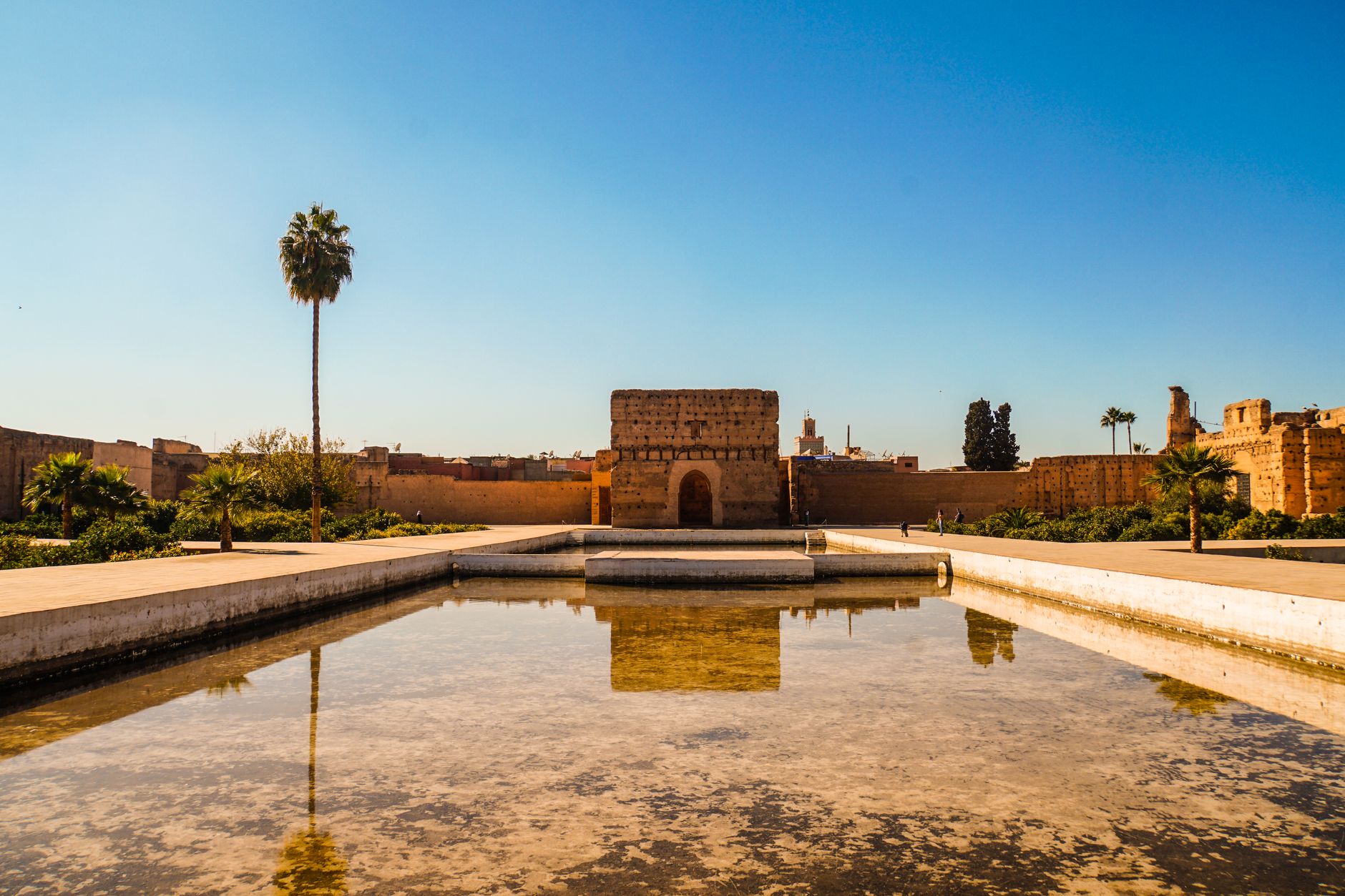
Morocco's medinas are genuinely disorienting. Marrakech's souks, Fes el-Bali, the narrow alleyways of Chefchaouen - good Maps coverage isn't optional, it's how you find your riad again. Fortunately, coverage in Morocco's main cities is solid.
Networks
Maroc Telecom (IAM) has the best national coverage in Morocco, including the best reach into rural and desert areas. Orange Morocco is strong in cities. Inwi is primarily urban. International eSIM plans typically use Maroc Telecom, which is the right call for anyone venturing beyond the major cities.
Coverage by area
Marrakech: Excellent across the medina, Gueliz (the new city), and the Palmeraie. The Djemaa el-Fna square is saturated with signal - practically every vendor has a phone out.
Fes: Good in Fes el-Bali and Fes el-Jdid. The tannery quarter and around Bab Bou Jeloud have solid coverage. The medina is the largest medieval Islamic city in the world and it's very easy to get turned around without Maps working.
Chefchaouen: Good in the blue city itself. The surrounding Rif Mountains get patchier as you move away from town.
Casablanca and Rabat: Major cities with excellent coverage.
Essaouira: Solid in town and on the beach. The wind makes Instagram harder than connectivity does.
Merzouga and the Sahara: Coverage in Merzouga town itself and the immediate area. Once you're in the dunes (Erg Chebbi) or on a camel trek, you're in very patchy territory. Maroc Telecom has some coverage even in parts of the Sahara, but don't rely on it. Download offline maps of the region and your camp location before you leave Merzouga.
High Atlas (Toubkal area): Good signal in Imlil village (the main trekking gateway). The Mount Toubkal trail above Imlil gets increasingly patchy. Summit area: essentially no signal.
Getting around Morocco with data
Morocco doesn't have Uber. The ride-hailing apps here are Careem and inDrive. In Marrakech and Casablanca, they work reasonably well but coverage is inconsistent compared to what you're used to. Petit taxis (the small coloured taxis in each city) are still the most common way to get around, and they don't need an app - just flag one down and negotiate the price or insist on the meter.
For intercity travel, the ONCF train network connects Casablanca, Rabat, Fes, and Marrakech. The Al Boraq high-speed train between Casablanca and Tangier is modern and has decent signal along the route. CTM buses are the reliable option for routes the trains don't cover (Chefchaouen, Essaouira, desert destinations). Having data to check bus schedules on the CTM website saves a trip to the station.
Medina navigation tips
Here's something most travel guides don't tell you: Google Maps is decent for Morocco's medinas, but it's not perfect. The narrow alleyways and covered passages can confuse GPS positioning by 20-50 metres. That doesn't sound like much, but in a medina where every alley looks the same, 50 metres can put you in the wrong neighbourhood.
Drop a pin on your riad before you go exploring. When you're lost (and you will get lost - that's part of the experience), find your way back to the pin rather than the address. The GPS dot plus the pin gives you a direction to walk even when Maps can't calculate a precise route through the alleys.
Haggling and data
This might sound odd, but having data helps with shopping in the souks. If you're buying a Moroccan rug, leather bag, or ceramic piece, a quick price check on similar items gives you a baseline for negotiation. Vendors often start at 3-5x the actual market price. Knowing what something roughly costs before you start bargaining puts you in a much stronger position.
The desert experience
Most Morocco trips include a desert excursion to Merzouga or M'Hamid. The drive from Marrakech through the Tizi n'Tichka pass and Ouarzazate takes about 10 hours and coverage drops noticeably past Ouarzazate. The Dades Gorge and Todra Gorge have coverage in the main tourist areas. The road between Tinghir and Merzouga is where things get sparse.
For your desert camp night (sleeping in a tent in the Sahara dunes), don't expect any connectivity. That's actually part of the appeal. Take photos and upload them when you're back in Merzouga the next morning.
Language considerations
Morocco's official languages are Arabic and Amazigh (Berber), with French widely spoken in cities. In tourist areas of Marrakech and Fes, you'll find some English. But outside the main tourist trail, French or Arabic is needed. Google Translate handles French well offline. Arabic translation is decent but not perfect for Moroccan dialect (Darija), which differs significantly from standard Arabic. Download both French and Arabic offline packs before arriving.
Buying tips
Local Moroccan SIMs are cheap and easy to buy - IAM shops are everywhere in major cities. But they require passport registration and a Moroccan phone number for top-ups. For a two-week trip, an international eSIM is simpler.
Check /esim-in-morocco on getesimonline.com for plans. A 5GB/15-day plan is comfortable for a typical Morocco itinerary. If you're spending significant time in Marrakech and Fes (both heavy Maps usage cities), consider bumping to 8GB.
Get Your eSIM for Morocco
See our Morocco eSIM plans for Marrakech, Fes, and the Sahara. Also visiting Spain or Portugal? Just a short flight away.
Ready to get connected?
Browse affordable eSIM data plans for 200+ countries. Instant activation, no roaming fees.
Browse eSIM PlansTraveling to Morocco?
Browse affordable eSIM data plans for Morocco. Plans start from $2.38. Instant activation, no roaming fees.