
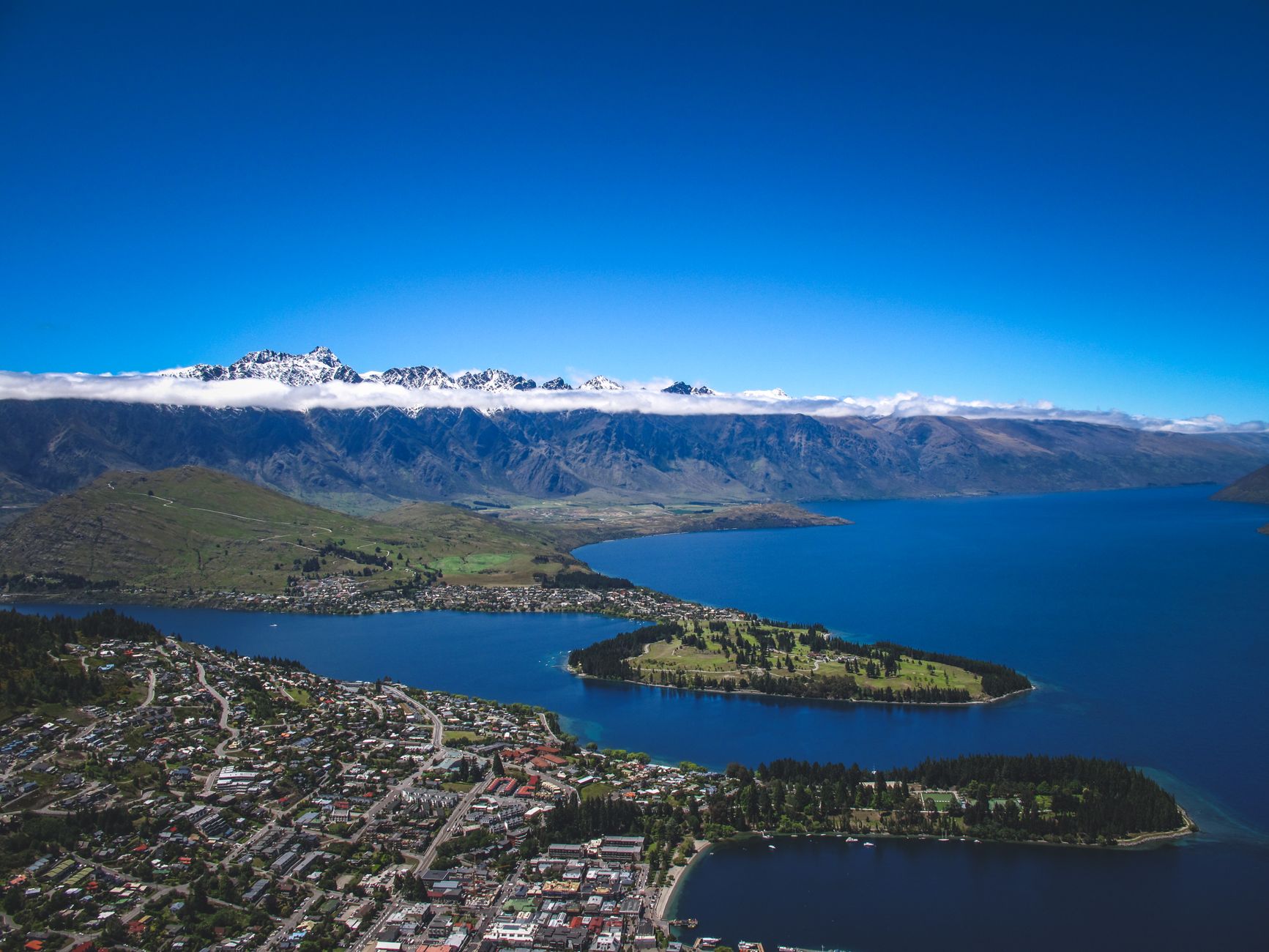
New Zealand is beautiful and sparsely populated. Those two facts are connected, and the sparse population bit has direct implications for mobile coverage: urban areas are excellent, rural and remote areas are significantly less so.
Networks
Spark New Zealand has the best national coverage and is used by most international eSIM roaming partners. Vodafone NZ is good in urban areas. 2degrees has strong coverage in major centres. For anything outside cities, Spark-backed plans are the best choice.
North Island
Auckland: Full 4G/5G in the city and suburbs. Good on the ferry to Waiheke Island too.
Wellington: Excellent. Compact city with full coverage.
Rotorua and the Volcanic Plateau: Good in town. The thermal areas (Wai-O-Tapu, Wairakei) have decent signal. The Tongariro Alpine Crossing has coverage at the trailheads and some spots on the trail, but plan for significant gaps during the hike.
Bay of Islands: Paihia and Russell have good coverage. The Hole in the Rock boat trip maintains signal for the first portion but drops off as you head further from shore. Waitangi Treaty Grounds have full coverage.
South Island
Christchurch: Solid across the city.
Queenstown: Excellent. It's a well-touristed hub and the coverage reflects that. Arrowtown, Wanaka - both fine. The Remarkables ski area has coverage at the base.
Milford Sound: Here's the reality - the road to Milford Sound (State Highway 94) is very long, very scenic, and very patchy for signal. Homer Tunnel and the fiord itself have essentially no coverage. Download offline maps, your accommodation info, and anything else you need before you leave Te Anau.
Franz Josef and Fox Glaciers: Coverage in the townships. The glaciers themselves and the walks are outside coverage.
West Coast generally: This is New Zealand's least-populated coast and coverage reflects that. The Pancake Rocks at Punakaiki have signal. The stretches between major points? Download your stuff in advance.
South Island road trip advice
Download the full South Island offline map before you leave Auckland or Christchurch. Seriously. The distances between towns with coverage can be long, and New Zealand roads can be unpredictable - rockfalls, flooding, closures. Having offline maps isn't paranoia; it's sensible.
Driving in New Zealand with data
New Zealand is a road trip country. Most visitors rent a car or campervan and spend 2-3 weeks driving around. Data is important for navigation, but there's a practical issue: many New Zealand roads are narrow, winding, and require full attention. Don't try to follow Maps directions on your phone screen while driving the Crown Range Road - mount your phone properly and use voice navigation.
Google Maps is accurate for New Zealand roads, but the drive time estimates are often optimistic. NZ roads look short on the map, but they wind through mountains and along coasts. A "2-hour drive" on Maps regularly takes 2.5-3 hours. Build in extra time and don't rely on your phone's ETA.
Campervans and connectivity
If you're doing the campervan thing (very popular in NZ), your connectivity needs change slightly. Freedom camping spots are often in remote areas with no signal. Holiday parks and commercial campgrounds in towns usually have WiFi (of variable quality). Use town stops to download everything you need for the next leg of your trip.
Some campervan rental companies offer portable WiFi hotspot devices as add-ons. These use the same cellular networks as an eSIM, so they won't work where cellular doesn't. An eSIM on your phone does the same job without the extra device. Save the rental fee.
Great Walks and hiking
New Zealand's Great Walks (Milford Track, Routeburn Track, Abel Tasman Coast Track, etc.) are multi-day hikes in remote areas. Expect no cellular coverage on most of them. Huts along the tracks don't have WiFi. If you need to communicate during a multi-day hike, a personal locator beacon (PLB) is the right tool, not a phone. Most hut wardens can help in emergencies, but your phone is essentially a camera and offline map reader while on the trails.
Weather apps and data
New Zealand weather changes rapidly, especially on the South Island. "Four seasons in one day" isn't a joke - it's a genuinely useful way to describe what happens in places like Queenstown or the West Coast. The MetService NZ app gives accurate local forecasts, and having data to check it in the morning helps you plan whether to do that hike or wait a day. Mountain weather in particular can go from sunny to dangerous quickly, and checking conditions before setting out is basic safety.
How much data?
Two weeks in New Zealand with a mix of city and nature: 6-8GB is comfortable. If you're mostly in cities: 5GB works. For a South Island road trip where you'll be downloading lots of content offline: the data itself won't be used heavily, but make sure you download before you go. See /esim-in-new-zealand on getesimonline.com for plan options.
Get Your eSIM for New Zealand
Browse our New Zealand eSIM plans for both islands. Coming from or heading to Australia? Check those plans too.
Ready to get connected?
Browse affordable eSIM data plans for 200+ countries. Instant activation, no roaming fees.
Browse eSIM PlansTraveling to New Zealand?
Browse affordable eSIM data plans for New Zealand. Plans start from $1.70. Instant activation, no roaming fees.