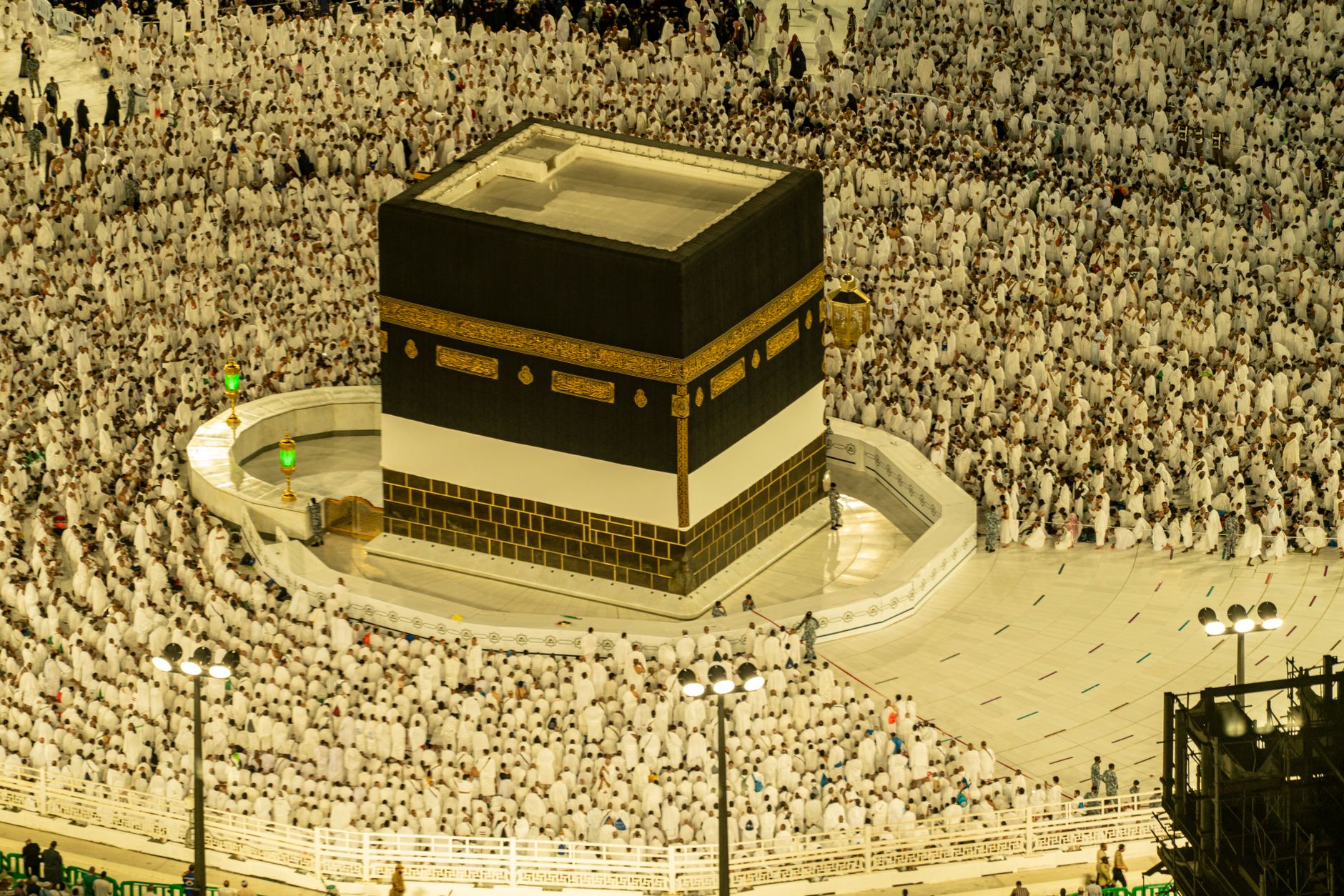
Performing Hajj or Umrah means spending significant time in two of the most densely crowded cities in the world. During peak Hajj season, over three million pilgrims are in the Makkah region simultaneously. Mobile network capacity is pushed to its absolute limits.
Saudi Arabia's mobile networks
Saudi Arabia has three main carriers: STC (Saudi Telecom Company), Mobily, and Zain. All three have invested heavily in network capacity in the Haram area specifically - the Saudi government understands that connectivity during Hajj is an infrastructure priority.
STC has the best overall coverage and the most network capacity in Makkah and Madinah. If your international eSIM uses STC infrastructure, you're in the best position. Mobily is a reasonable second option.
What to expect during Hajj
Honestly, during peak Hajj periods - Tawaf around the Kaaba, the days of Arafat, Muzdalifah - network congestion is real. Millions of people simultaneously trying to make calls, send messages, and use data creates bottlenecks even on well-provisioned networks.
Voice and video calls will be the most affected - they require consistent throughput. Text messages and WhatsApp texts typically still go through even when calls struggle. Download any navigation, du'aa, and Hajj guide apps you need before you arrive, and save offline maps of Makkah and Madinah.
The Saudi government has been expanding temporary cell towers during Hajj season year after year. Each year the network performance improves slightly, but the sheer density of people in a confined area means some congestion is unavoidable. Be patient and plan for it.
Staying connected with your group
Losing contact with your group at the Haram is a really common problems pilgrims face. A few practical steps make a big difference. Set up a WhatsApp group for your Hajj party before you travel. Agree on meeting points in advance for each ritual site. Share live locations when you're in crowded areas.
Text messages are more reliable than calls during peak congestion. If you can't get a voice call through, send a WhatsApp text or SMS - these use far less bandwidth and queue up until they can be delivered. Voice notes also work well because they send as small files rather than requiring a live connection.
Umrah (outside peak Hajj season)
Umrah throughout the year, outside Hajj season, is a different experience connectivity-wise. The networks are not under the same load. 4G is reliable in both the Masjid al-Haram area and throughout Makkah and Madinah. You'll have good connectivity for navigation, communication with your group, and staying in touch with family.
Ramadan Umrah is busier than regular months but still nowhere near Hajj-level congestion. You should have a reliable connection for most of your stay, with possible slowdowns during Tarawih prayers when the Haram is at its fullest.
Practical connectivity tips for pilgrims
Download offline maps of Makkah (focusing on the area between Masjid al-Haram, Mina, Arafat, and Muzdalifah) before you arrive. A dedicated Hajj navigation app with offline capability is worth having. The pilgrim tent cities in Mina cover vast areas and it's easy to become disoriented - having offline maps can be genuinely important for safety.
Share your live location with your group via WhatsApp at major sites where crowds are dense. Even when voice calls struggle, location sharing via messaging usually works.
Save the emergency contact numbers (Saudi Civil Defense: 998, Emergency: 911, Hajj Mission helpline for your country) offline in your phone.
Bring a portable battery pack. A big one - 20,000mAh or more. You'll be out all day during Hajj rituals, your phone will be searching for congested networks (which drains battery faster), and charging opportunities at Mina and Arafat are limited. Running out of battery when you need to contact your group or find your way back to your tent is a real problem that's easily prevented.
The Madinah portion
Most pilgrims visit Madinah either before or after Hajj/Umrah. The city is much less crowded than Makkah (except during the Prophet's Mosque expansion periods) and network performance is consistently good. You'll have reliable 4G throughout the city, including around Masjid an-Nabawi and the surrounding hotel district.
The area around the Prophet's Mosque is walkable, but the wider city requires taxis or ride-hailing. Careem works in Madinah and is the easiest way to get around. A working data connection through your eSIM makes transport straightforward.
eSIM vs local Saudi SIM
Local Saudi SIMs require passport registration and are easy to buy at Jeddah airport (King Abdulaziz International, which most pilgrims arrive through) or in Makkah. They're reasonably priced and give direct carrier access. An eSIM from an international provider like getesimonline.com is more convenient to set up before you travel but may run on a roaming arrangement rather than direct network access, which can affect priority during high-congestion periods.
For Umrah outside Hajj season, an eSIM works perfectly well. For Hajj itself, having a local SIM as a backup is worth considering given the extreme network conditions. Some pilgrims carry both - an eSIM for data and a local SIM for calls and texts as a fallback. If your phone supports dual SIM (or eSIM plus physical SIM), this is the most reliable setup.
Get Your eSIM for Hajj and Umrah
Browse our Saudi Arabia eSIM plans for Makkah, Madinah, and Jeddah. Traveling from Pakistan, India, or Egypt? Check our route pages for savings.
Ready to get connected?
Browse affordable eSIM data plans for 200+ countries. Instant activation, no roaming fees.
Browse eSIM Plans