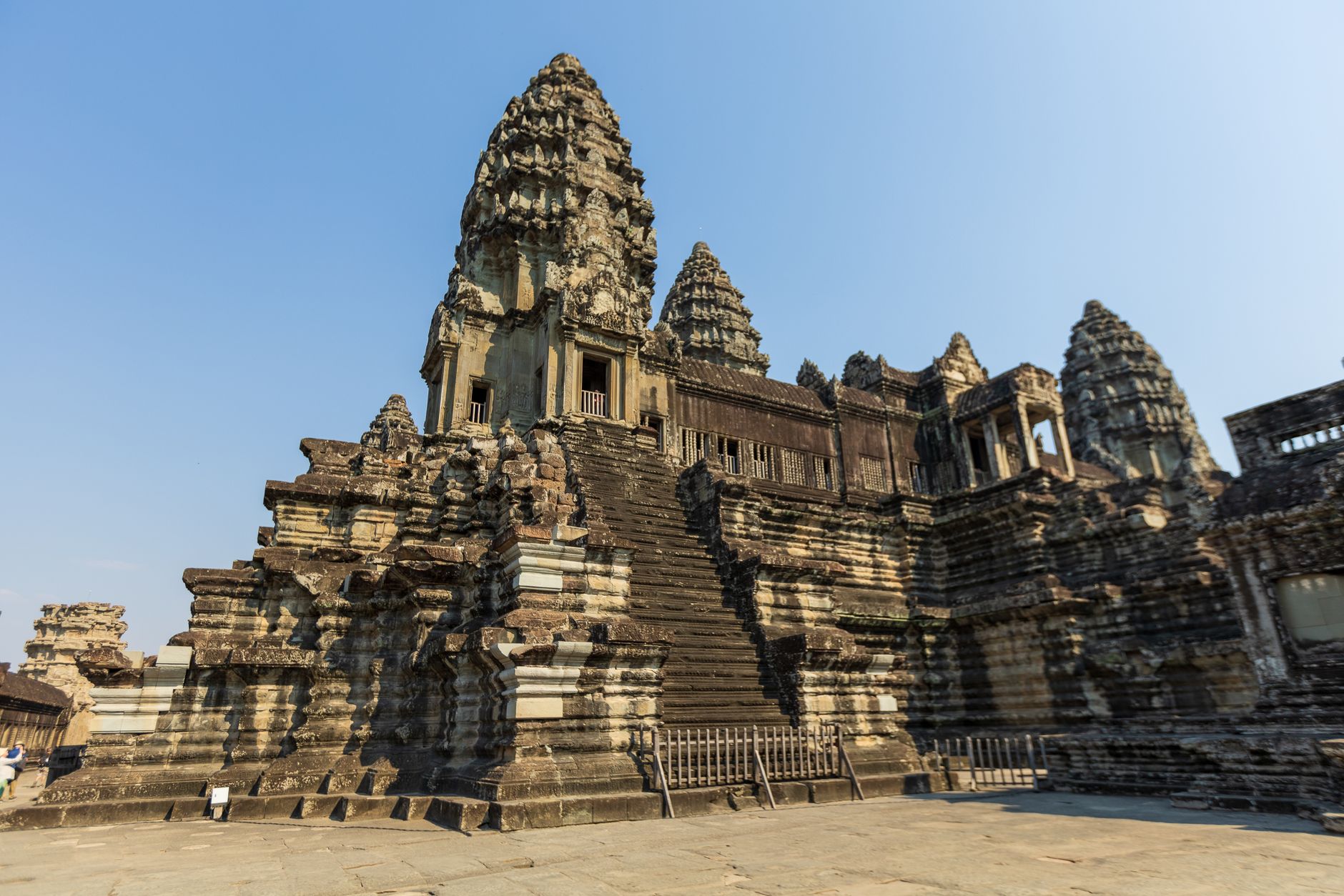
Cambodia blew me away. I went expecting ancient temples and budget travel, and I got both, but I also found a country with incredible food, warm people, and a complicated history that every visitor should learn about. From the jaw-dropping sunrise at Angkor Wat to the white sand beaches on the southern coast, Cambodia is one of Southeast Asia's most rewarding destinations.
Mobile connectivity in Cambodia is surprisingly good for a country where the average monthly income is around $300. Getting an eSIM before your trip is the fastest way to stay connected, and I'll walk you through everything you need to know for 2026.
Cambodia's Mobile Networks
Cambodia has several mobile operators, but the three that matter for travelers are Smart Axiata, Cellcard, and Metfone. Smart has the widest 4G coverage nationwide. Cellcard is strong in cities and tourist areas. Metfone has decent coverage but generally slower speeds.
4G coverage in Phnom Penh, Siem Reap, and Sihanoukville is reliable. I tested speeds of 15-35 Mbps in Siem Reap and 20-40 Mbps in Phnom Penh. That's not blazing fast by European or American standards, but it's more than enough for maps, messaging, social media, and video calls.
Outside major cities, coverage can be inconsistent. Rural roads, smaller towns, and some coastal areas might drop to 3G or lose signal entirely. But the main tourist routes between Phnom Penh, Siem Reap, and the coast are well covered.
eSIM Plans for Cambodia
Cambodia eSIM plans are very affordable, reflecting the low cost of living in the country:
- 1 GB, 7 days: around $4-6
- 3 GB, 7 days: around $7-10
- 5 GB, 15 days: around $10-14
- 10 GB, 30 days: around $15-20
- Southeast Asia regional plan (5-10 GB): around $15-25, covering Cambodia, Thailand, Vietnam, and more
If you're doing a multi-country Southeast Asia trip (which many travelers do), a regional plan is the smart choice. One eSIM covers Cambodia, Thailand, Vietnam, Laos, and Malaysia without switching plans at each border.
Siem Reap: Gateway to Angkor
Siem Reap exists because of Angkor Wat, and that's perfectly fine because Angkor Wat is one of the most remarkable places on Earth. The temple complex is massive: over 400 square kilometers of ruins spanning from the 9th to the 15th century.
Angkor pass prices in 2026:
- 1-day pass: $37
- 3-day pass: $62 (valid for 10 days)
- 7-day pass: $72 (valid for a month)
I bought the 3-day pass, and I'd recommend the same unless you're really short on time. There's too much to see in one day. Angkor Wat itself, Bayon with its giant stone faces, Ta Prohm where tree roots have swallowed entire buildings, Banteay Srei with its intricate pink sandstone carvings. Each one deserves time.
Coverage at the main Angkor temples is decent. I had 4G at Angkor Wat, Bayon, and Ta Prohm. Smaller and more remote temples like Beng Mealea (about 70 km from Siem Reap, admission $5) had weaker signals. Download offline maps of the temple complex before you go.
A tuk-tuk driver for a full day at Angkor costs about $15-20. They know all the temples and the best routes to avoid crowds. Find one through your hotel or guesthouse. Having data lets you use Google Maps to follow along and make sure you're not missing any sites on your list.
In Siem Reap town, Pub Street is the main tourist strip. Cheap beers for $0.50-1, food stalls everywhere, and a lively atmosphere every night. But the real food is off Pub Street. Try Cuisine Wat Damnak, one of the best restaurants in Cambodia, where a set menu costs about $30-35 per person. Or eat at the local stalls in the Old Market area where a plate of lok lak (stir-fried beef with pepper sauce) costs about $3-4.
Phnom Penh: History and Hustle
Cambodia's capital is chaotic, intense, and fascinating. It moves at a pace that can be overwhelming at first, with motorbikes weaving through traffic in every direction and markets spilling onto sidewalks. But give it a day or two, and you'll find a city with real depth.
Two places are essential visits, both sobering. The Tuol Sleng Genocide Museum (admission $5) is a former high school that the Khmer Rouge converted into a prison and torture center. The Killing Fields at Choeung Ek ($6, including audio guide) are about 17 km outside the city. Together, they tell the story of the Cambodian genocide from 1975 to 1979, when roughly 2 million people were killed. These aren't easy visits, but they're important ones.
The Royal Palace and Silver Pagoda ($10 admission) are gorgeous and provide contrast to the heavier historical sites. The National Museum ($10) houses an outstanding collection of Khmer sculpture and art.
Phnom Penh's riverside promenade (Sisowath Quay) is a great place to walk in the evening. Street food vendors sell everything from grilled corn to fried noodles for $1-3. The rooftop bars along the river offer sunset views with cocktails for about $4-6.
Coverage in Phnom Penh is the best in the country. I had consistent 4G everywhere, including inside the markets, along the riverfront, and in ride-hailing cars (Grab is the main ride-hailing app in Cambodia, and it works just like Uber).
The Cambodian Coast: Beaches and Islands
Sihanoukville used to be a backpacker beach town. Then Chinese investment transformed it into a massive construction site with casinos and high-rises. Many independent travelers skip it now and head straight to the islands or to Kampot instead.
Koh Rong and Koh Rong Samloem: These two islands off the coast of Sihanoukville are where you'll find the best beaches in Cambodia. White sand, clear water, and a laid-back vibe. Ferries from Sihanoukville cost about $10-15 each way and take 45-60 minutes.
Cell coverage on the islands varies. Koh Rong has 4G in the main beach areas (Koh Touch village), but other parts of the island drop to 3G or nothing. Koh Rong Samloem is more remote, with coverage limited to the main jetty area and a few guesthouses that have boosted signals. Most accommodations have WiFi, though speeds are typically slow (2-5 Mbps).
Budget accommodation on the islands runs $15-30 per night for a basic bungalow. Mid-range options with air conditioning and private bathrooms are $40-80.
Kampot: This riverside town near the coast is Cambodia's most charming small town. Known for its pepper plantations (Kampot pepper is famous worldwide), French colonial architecture, and a relaxed atmosphere. A pepper plantation tour costs about $5-10. Bokor National Park, accessible from Kampot, has an eerie abandoned hill station and great views. Coverage in Kampot town is good, but the road up to Bokor has spotty signal.
Kep: Just 25 km from Kampot, Kep is famous for its crab market. Fresh crab with green Kampot pepper sauce costs about $5-8 per plate and is one of the best things I ate in all of Southeast Asia. Coverage in Kep is adequate for basic use.
Getting Around Cambodia
Buses connect all major cities. The Phnom Penh to Siem Reap route takes about 6 hours and costs $10-15 on a comfortable bus (Giant Ibis or Mekong Express are the best companies). Phnom Penh to Kampot is about 3 hours for $8-12. Book through the company websites or apps, all of which require data.
Domestic flights between Phnom Penh and Siem Reap take about 45 minutes and cost $50-100 one way. Cambodia Angkor Air and Lanmei Airlines operate this route.
Within cities, tuk-tuks are the main transport. A short ride in Phnom Penh costs about $2-3. In Siem Reap, $3-5 gets you most places. Grab is available in Phnom Penh and offers fixed pricing, which eliminates the need to negotiate.
Motorbike rentals are popular with adventurous travelers. A semi-automatic bike costs about $5-8 per day. But Cambodian traffic is chaotic, road rules are suggestions at best, and medical facilities outside Phnom Penh are limited. I'd only recommend motorbike travel if you're an experienced rider.
Data Usage Tips for Cambodia
Cambodia's internet speeds are lower than what you might be used to in Europe or North America. This actually works in your favor for data conservation. Slower connections mean pages load at lower quality and videos buffer at lower resolution, using less data overall.
- 3-5 day trip to Siem Reap only: 2-3 GB is enough
- One week covering Siem Reap and Phnom Penh: 3-5 GB
- Two weeks including the coast and islands: 5-7 GB
- Extended stay with regular video calls: 10+ GB
Download offline maps for the entire country before you arrive. Cambodia's road system has improved dramatically, but signage can be minimal, and having offline navigation is a genuine safety feature on rural roads.
Practical Cambodia Tips
Cambodia uses the US dollar for most transactions. You'll pay in dollars everywhere, and receive change in Cambodian riel for amounts under $1 (4,000 riel equals $1). ATMs dispense US dollars. Credit cards are accepted at hotels and upscale restaurants but not at markets, street stalls, or small shops. Carry cash.
The weather is hot year-round. Temperatures hover between 28 and 35 degrees Celsius. The dry season (November to April) is the best time to visit. The wet season (May to October) brings afternoon thunderstorms but fewer tourists and lower prices.
Hydrate constantly. Carry a water bottle and refill it. A 1.5-liter bottle of water costs about $0.50 from any shop. Dehydration at Angkor Wat is common because tourists underestimate how much walking and heat are involved.
Cambodia is one of those countries that stays with you long after you leave. The beauty of Angkor at dawn, the resilience of the Cambodian people, the taste of fresh amok (fish curry steamed in banana leaves), the sound of monks chanting at a pagoda. An eSIM keeps you connected to share these moments as they happen, and it helps you find the next ones. Set it up before you fly, and you'll hit the ground running the moment you land in Phnom Penh or Siem Reap.
Ready to get connected?
Browse affordable eSIM data plans for 200+ countries. Instant activation, no roaming fees.
Browse eSIM PlansTraveling to Cambodia?
Browse affordable eSIM data plans for Cambodia. Plans start from $1.80. Instant activation, no roaming fees.