Chile is a country shaped like a ribbon draped along the edge of South America. It stretches over 4,300 km from north to south, which means you can go from the driest desert on Earth to Patagonian glaciers in a single trip. I did exactly that over three weeks last year, and an eSIM made the logistics so much easier.
If you're planning a Chile trip in 2026, here's your complete guide to staying connected across Santiago, the Atacama Desert, wine country, and Patagonia.
Chile's Mobile Networks
Chile has three main mobile operators: Entel, Movistar, and Claro. Entel generally has the best coverage across the country, including more remote areas. Movistar is strong in cities. Claro is the budget option with decent urban coverage but weaker in rural zones.
4G coverage in Santiago and other major cities is excellent, with speeds of 30-60 Mbps being typical. Outside cities, coverage depends heavily on where you are. The Pan-American Highway (Ruta 5) has consistent coverage along most of its length. But once you turn off main roads, especially in the Atacama or Patagonia, signals can disappear quickly.
Chile's eSIM plans range from about $6 for 1 GB to $25-30 for 10-20 GB. Most providers use Entel or Movistar networks, which gives you the best combination of speed and coverage.
Santiago: The Starting Point
Almost every international flight to Chile arrives at Arturo Merino Benitez International Airport (SCL) in Santiago. The city itself is a mix of colonial architecture, modern skyscrapers, street art, and some of the best food in South America.
Coverage in Santiago is seamless. I tested speeds in multiple neighborhoods and consistently got 40-70 Mbps. Even in the older parts of the city like Barrio Lastarria and Barrio Brasil, 4G coverage was strong.
Must-do things in Santiago:
- Cerro San Cristobal: Take the funicular (about 3,500 CLP, roughly $3.50) to the top for panoramic views of the city with the Andes as a backdrop. On a clear day, it's stunning.
- La Vega Central market: This massive produce market is where locals shop. Fresh fruit juices cost 1,000-2,000 CLP ($1-2). The seafood section is incredible.
- Barrio Lastarria: Santiago's hip neighborhood with cafes, bookshops, and the Museo de Artes Visuales (2,000 CLP admission).
- Mercado Central: A gorgeous iron-and-glass market building where you can eat a plate of ceviche or a caldillo de congrio (conger eel soup, a Chilean classic) for about 8,000-12,000 CLP ($8-12).
- The Metro: Santiago's metro system is clean, efficient, and cheap. A single ride costs 800 CLP ($0.80) during peak hours. The Bip! transit card works on buses too.
The Atacama Desert: Connectivity in the Driest Place on Earth
San Pedro de Atacama is the base for exploring the Atacama Desert. This small town (population about 5,000) sits at 2,400 meters elevation and is the launching point for geysers, salt flats, and some of the clearest stargazing skies on the planet.
Getting there: Fly from Santiago to Calama (about 2 hours, tickets around $60-100 one way on LATAM or Sky Airline), then take a shared shuttle or bus to San Pedro de Atacama (about 1.5 hours, around 5,000-8,000 CLP).
Coverage in San Pedro town is decent. You'll have 4G in the town center and along the main street, Caracoles. But the moment you leave town for tours, connectivity becomes unreliable.
Key Atacama experiences and their connectivity:
- Valle de la Luna (Moon Valley): About 15 km from town. Patchy signal at best. Download maps beforehand.
- El Tatio Geysers: 90 km from San Pedro at 4,300 meters elevation. No reliable signal. Tours leave at 4 AM to arrive at sunrise.
- Salar de Atacama: The largest salt flat in Chile. Spotty coverage near the flamingo lagoons.
- Piedras Rojas and the Altiplanic Lagoons: Remote and high altitude (4,000+ meters). No signal expected.
- Stargazing tours: These happen in total darkness outside town. No signal, and honestly, you won't want one. The Milky Way is visible to the naked eye.
Tours in the Atacama range from 20,000 to 50,000 CLP ($20-50) per person. Book them at one of the many agencies on Caracoles street. I recommend booking a day ahead and using your data to compare reviews on TripAdvisor or Google Maps.
Valparaiso and Wine Country
Valparaiso is about 120 km west of Santiago, a 90-minute bus ride (about 5,000-7,000 CLP from the Pajaritos terminal). This port city is famous for its colorful hillside houses, street art, and ascensores (funicular elevators), some over 100 years old. A ride on an ascensor costs about 300 CLP.
Coverage in Valparaiso is solid in the flat downtown area (El Plan) and on the main cerros (hills) like Alegre and Concepcion. Some of the steeper, less-touristed hills might have weaker signals.
The Casablanca Valley between Santiago and Valparaiso is Chile's coastal wine region. Known for excellent Sauvignon Blanc and Pinot Noir. Tastings at wineries like Kingston Family, Emiliana, and Casas del Bosque cost about 10,000-20,000 CLP ($10-20) per person. Coverage along the highway is fine, but some vineyards down private roads have weak signals.
For red wine lovers, the Maipo Valley south of Santiago and the Colchagua Valley near Santa Cruz are where you'll find Chile's best Cabernet Sauvignon and Carmenere. Tours from Santiago to Maipo or Colchagua typically cost $60-100 per person including tastings and lunch.
Patagonia: Torres del Paine and Beyond
This is the big one. Patagonia is why many people come to Chile, and it's also where connectivity is most limited.
Punta Arenas is the main gateway city, reached by a 3.5-hour flight from Santiago ($100-200 one way). From there, it's about a 3-hour drive to Puerto Natales, the base town for Torres del Paine National Park.
Coverage in Punta Arenas and Puerto Natales is good. Both towns have 4G, and you can take care of any digital tasks here before heading into the park.
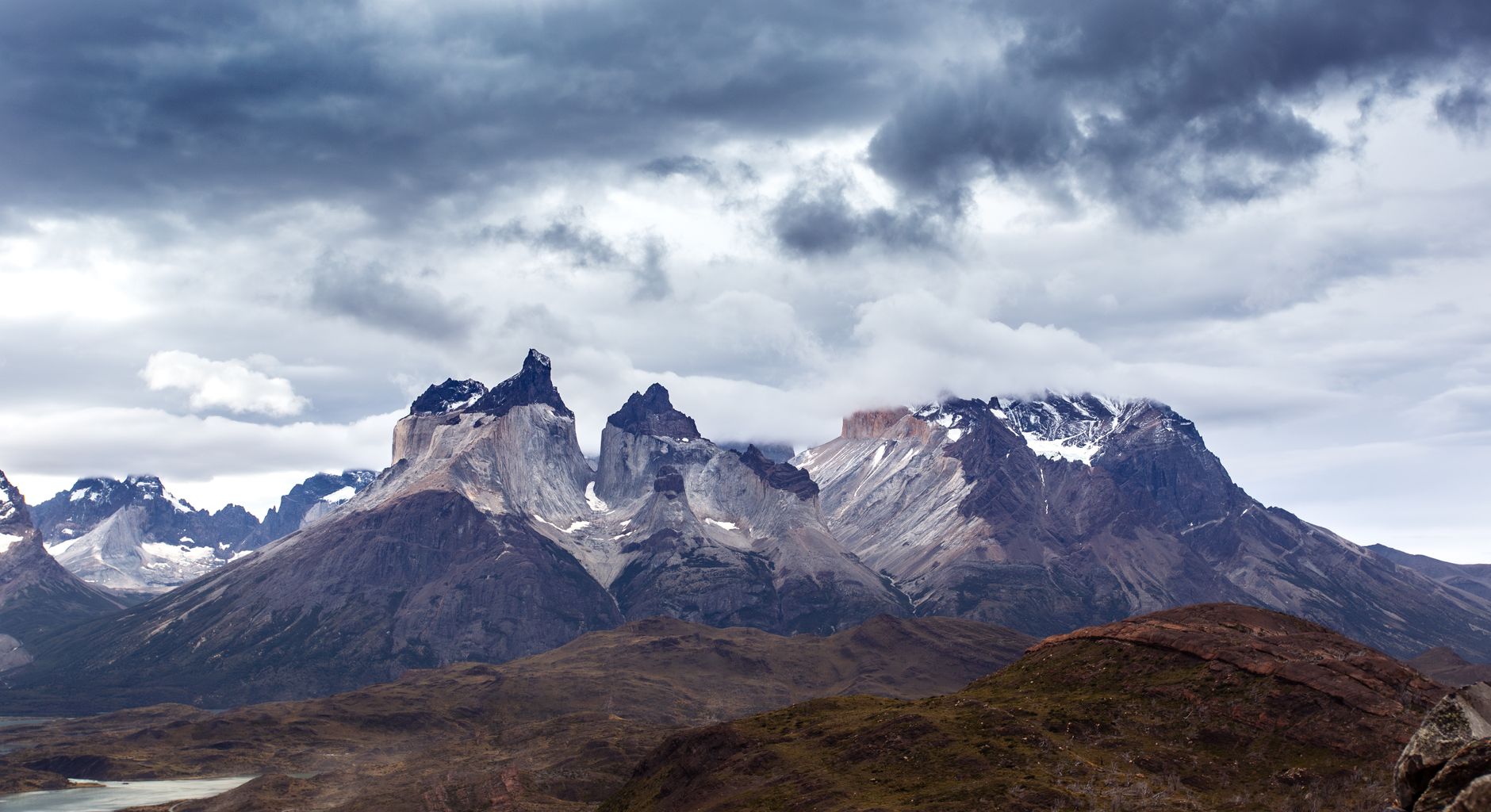
Torres del Paine National Park itself has very limited cell coverage. The park entrance and the main administration area near Lago Toro have some signal. The major refugios (mountain huts) along the W Trek, like Refugio Torres, Refugio Cuernos, and Refugio Grey, have varying levels of WiFi (often slow and unreliable, about 5,000-10,000 CLP per day where available).
On the trail between refugios, expect no signal. The W Trek takes 4-5 days, and the full O Circuit takes 7-9 days. Park entry costs 38,000 CLP ($38) for foreigners in peak season (October-April).
My advice for Patagonia: accept that you'll be mostly offline in the park, and enjoy it. Download all your maps offline, let your family know your itinerary before you enter, and check in when you reach a refugio with WiFi. The scenery is so overwhelming that you won't miss your phone.
How Much Data for Chile?
Chile trips tend to be longer because of the distances involved. Here's my recommendation:
- Santiago city break (3-5 days): 3-5 GB
- Santiago plus Valparaiso (one week): 5 GB
- Santiago, Atacama, and wine country (10 days): 5-7 GB (much of the Atacama is offline)
- Full Chile trip including Patagonia (2-3 weeks): 7-10 GB
You might think Patagonia requires more data, but the opposite is true. You'll barely use data in the park. Most of your usage will be in Santiago, San Pedro de Atacama town, Puerto Natales, and Valparaiso.
Practical Tips for Chile
Chile uses the Chilean Peso (CLP). As of 2026, the exchange rate is roughly 900-1,000 CLP to $1 USD. ATMs are everywhere in Santiago and major cities. Smaller towns in the Atacama and Patagonia may have limited ATMs, so carry some cash.
The LATAM Airlines app and the TurBus app both require data for booking domestic flights and intercity buses. Chile's bus system is excellent for long distances. A Santiago to Valparaiso bus costs about $5-7, and a luxury sleeper bus from Santiago to Temuco or Pucon costs about $20-35.
Spanish is essential outside of Santiago's tourist zones. Google Translate's download-for-offline feature is a lifesaver. Download the Spanish language pack before you arrive.
Chile is a country of extremes, from the bone-dry Atacama to the wind-battered glaciers of Patagonia, from the bustling streets of Santiago to the silent valleys of the Lake District. An eSIM keeps you connected where coverage exists and lets you focus on the experience where it doesn't. Buy your plan before you fly, download your offline essentials, and get ready for one of the most geographically dramatic countries on the planet.
Ready to get connected?
Browse affordable eSIM data plans for 200+ countries. Instant activation, no roaming fees.
Browse eSIM PlansTraveling to Chile?
Browse affordable eSIM data plans for Chile. Plans start from $3.64. Instant activation, no roaming fees.