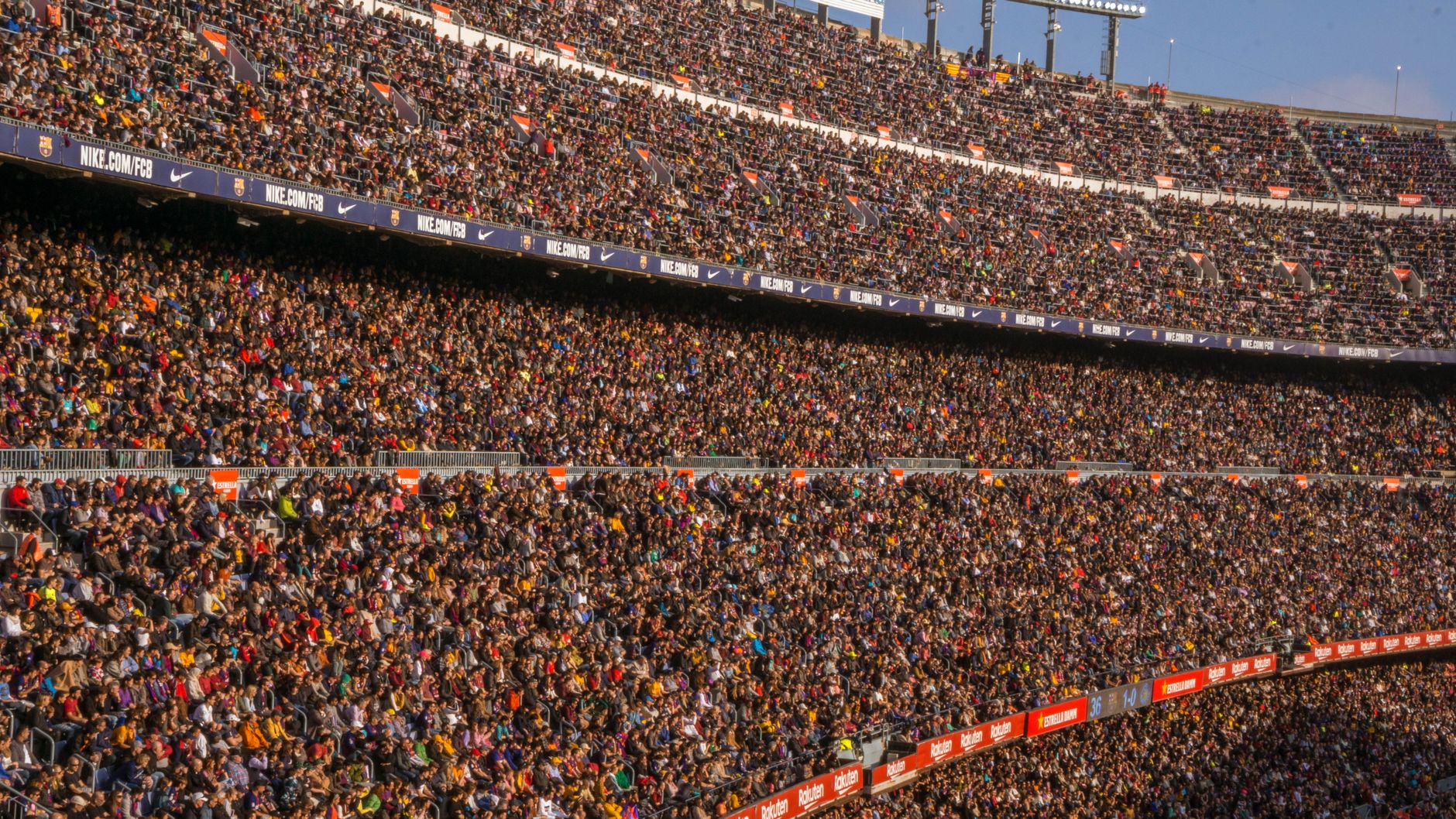
I was at a Champions League match in Madrid last year when I realized something. Around me, 65,000 fans were all trying to share videos, post stories, and stream updates on their phones. The stadium WiFi had given up completely by kickoff. Fans who'd relied on free WiFi or hotel connections were stuck. Those of us with local data on an eSIM? We were uploading goal celebrations in real time.
If you're traveling abroad to watch a football match, a tennis Grand Slam, the Olympics, a Formula 1 race, or any major sporting event, having your own mobile data is not a luxury. It's a necessity. Here's how to stay connected when you're surrounded by thousands of other fans doing the exact same thing.
Why Stadium WiFi Almost Never Works
Sports venues are designed for one thing: packing in as many fans as possible. The WiFi infrastructure often takes a back seat. Even at modern stadiums that advertise free WiFi, the reality is grim when 40,000 to 80,000 people all try to connect at once.
I've tested WiFi at several major venues:
- Santiago Bernabeu, Madrid: WiFi available but effectively unusable during matches. Speeds under 1 Mbps.
- Melbourne Park during the Australian Open: WiFi worked in common areas but was painfully slow in the arena seats.
- Silverstone Circuit, British Grand Prix: WiFi at the fan zone only. Nothing at the grandstands.
- Stade de France, Paris: WiFi available but extremely congested during a Six Nations rugby match.
Your phone's cellular connection, on the other hand, connects to multiple cell towers. Mobile carriers deploy temporary cell towers (called COWs, or Cells on Wheels) at major events to boost capacity. This means your eSIM data connection will almost always outperform the venue WiFi.
What Sports Fans Need Data For
Attending a live sporting event abroad involves more digital activity than you might think:
- Getting to the venue: Navigation to the stadium, parking information, public transit directions. Many stadiums are outside city centers, and finding the right entrance or parking lot requires maps.
- Digital tickets: Most major events now use mobile tickets. The FIFA World Cup, Champions League, Olympics, and Formula 1 all use digital passes. If you can't load your ticket because you have no data, you could be stuck outside.
- Live updates and stats: Checking lineups, stats, injury updates, and following other matches happening simultaneously. Apps like ESPN, BBC Sport, or FotMob need data.
- Social media sharing: Posting photos and videos to Instagram, TikTok, X, or WhatsApp groups. A 30-second video clip can be 20-50 MB depending on quality.
- Communication: Coordinating with friends at the venue ("I'm at Gate 4, where are you?"), messaging family back home, or updating group chats.
- Ride-hailing after the event: Getting an Uber or local ride-hailing service after a match ends is critical. When 60,000 people pour out of a stadium simultaneously, taxi queues are brutal. Having Uber or Bolt ready on your phone is a massive advantage.
How Much Data Do You Need for a Sporting Event?
A typical match day uses more data than a regular sightseeing day. Here's a realistic estimate:
- Navigation to and from the venue: 20-30 MB
- Loading digital tickets and event apps: 30-50 MB
- Posting 5-10 photos to Instagram: 50-100 MB
- Uploading 3-5 short video clips: 100-250 MB
- Messaging and WhatsApp throughout the day: 50-100 MB
- Checking sports apps and news: 30-50 MB
- Ride-hailing after the event: 20-30 MB
Total for a match day: about 300-600 MB. If you're attending a multi-day tournament (like a Grand Slam tennis event over 4-5 days, or a multi-race F1 weekend), multiply accordingly.
For a week-long trip that includes attending 2-3 sporting events plus normal tourist activities, I'd recommend a 7-10 GB eSIM plan. That gives you plenty of room without stress.
Major Sporting Events Around the World: eSIM Guide
Premier League and Champions League (England): UK eSIM plans are widely available. A 5 GB plan for 7 days costs about $10-15. Coverage at Wembley, Old Trafford, Anfield, and the Emirates is excellent. All Premier League clubs use digital ticketing through their apps. Make sure the app is downloaded and your ticket is saved before match day.
La Liga and Champions League (Spain): Spain has fast 4G/5G coverage. Santiago Bernabeu in Madrid and Camp Nou in Barcelona both have strong cellular signals. A Spain eSIM with 5 GB runs about $10-16. Match tickets for top La Liga games range from 40 to 200 euros depending on the match and seats.
Formula 1 Grand Prix (various countries): F1 races happen in 24 countries across the calendar. Coverage varies wildly. Monaco GP has excellent coverage (tiny country, dense network). Bahrain GP has solid coverage. Suzuka in Japan has great coverage. Interlagos in Brazil is good in the grandstands but weak in the infield areas. Always get a country-specific or regional eSIM for the race location.
Tennis Grand Slams: The Australian Open (Melbourne), French Open (Paris), Wimbledon (London), and US Open (New York) all have cellular coverage in and around the venues. These events spread over two weeks, so plan for extended data use. A 10 GB plan is a comfortable choice. Wimbledon tickets through the public ballot are free to enter but highly competitive. Queue tickets on the day cost 25-50 pounds depending on the court.
Rugby World Cup and Six Nations: Held across various countries. The 2027 Rugby World Cup is in Australia. Get an Australia eSIM with 10+ GB if you're attending multiple matches across different cities.
Olympics: The 2028 Olympics are in Los Angeles. A US eSIM with 10-20 GB is recommended given the 16-day duration of the Games. Expect massive crowds and heavy network congestion at venues. Download everything offline that you can.
Pre-Event Preparation
Don't show up to a stadium in a foreign country and hope for the best. Here's my pre-event checklist:
Two days before:
- Confirm your eSIM is active and working in the host country
- Download the event's official app (most tournaments have one)
- Save your digital tickets to your phone's wallet (Apple Wallet or Google Wallet)
- Screenshot your tickets as backup in case the app fails
- Download offline maps of the area around the venue
Day of the event:
- Charge your phone to 100% before leaving the hotel
- Bring a portable power bank (10,000 mAh minimum)
- Check your remaining eSIM data balance
- Set up your ride-hailing app with a payment method that works internationally
- Share your live location with friends or travel companions via WhatsApp so you can find each other at the venue
Dealing with Network Congestion at the Venue
Even with your own cellular data, network congestion is real at major events. When 70,000 people are all using their phones at halftime, speeds can slow significantly. Here's how to work around it:
- Upload photos and videos during quiet moments (before the match, during play when fewer people are on their phones) rather than at halftime when everyone is posting
- Use text-based messaging (WhatsApp text, SMS) instead of voice notes or video calls during peak congestion
- Pre-compose social media posts and have them ready to upload when the network clears
- Close background apps that might be consuming bandwidth
- If you need to load your digital ticket, do it before entering the queue at the gates
Traveling Between Venues at Multi-City Events
Some sporting events span multiple cities. The FIFA World Cup, the Olympics, European Championship football, and cricket World Cups often have matches across 5-10 cities in a host country. You'll be taking trains, flights, and buses between venues.
An eSIM is perfect for this because it works across the entire country without any changes. Buy a plan with enough data and duration to cover your full stay, and you're set in every city.
For example, if you attended Euro 2024 in Germany, you might have gone to matches in Munich, Berlin, Dortmund, and Frankfurt over three weeks. A single Germany eSIM with 15-20 GB covered all the train bookings, hotel searches, navigation, and match-day connectivity across every city.
After the Final Whistle
The moments after a big match can be the trickiest for connectivity. Tens of thousands of people leave at the same time, all trying to order rides, check transit schedules, and call friends. This is when your eSIM earns its keep.
Pre-plan your exit strategy. Know which metro or bus line you need. Have the route saved on your maps app. If you're using Uber or a local ride-hailing service, set a pickup point a few blocks away from the stadium where traffic isn't gridlocked. In Madrid after the Bernabeu match, I walked 10 minutes to a quieter street and got a ride in 3 minutes, while fans at the stadium gates waited 45 minutes.
Being a sports fan abroad is one of the best travel experiences you can have. The energy of a packed stadium, the shared emotion with strangers, the stories you'll tell for years. An eSIM makes sure you can share those moments instantly, get where you need to go, and handle the logistics that come with being in an unfamiliar city on a big match day. Set it up before you travel, and all you have to worry about is cheering for the right team.
Ready to get connected?
Browse affordable eSIM data plans for 200+ countries. Instant activation, no roaming fees.
Browse eSIM Plans