I spent two weeks in Finland last winter, and I'm still thinking about it. The frozen lakes, the saunas, the reindeer sausage at a market stall in Helsinki. But you know what almost ruined the first day? Not having reliable mobile data when I landed at Helsinki-Vantaa Airport.
If you're planning a trip to Finland in 2026, an eSIM is the smartest way to stay connected. No hunting for a SIM card kiosk. No roaming charges that make you wince when the bill arrives. Just scan a QR code before you board, and you're online the moment you touch down.
Why You Need an eSIM for Finland
Finland has excellent 4G and 5G coverage across most of the country. Elisa, Telia, and DNA are the three major carriers, and they've built out networks that reach even remote parts of Lapland. But buying a local SIM as a tourist means finding a store, showing your passport, and dealing with Finnish-language menus on a prepaid plan.
An eSIM skips all of that. You buy it online, install it on your phone, and activate it when you arrive. Most plans give you data on local Finnish networks at speeds that feel just like home. Prices start around $5 for 1 GB and go up to $25-30 for 10-20 GB plans covering 7 to 30 days.
How Much Data Do You Actually Need in Finland?
This depends on what kind of traveler you are. Here's a rough breakdown:
- Light use (maps, messaging, email): 1-3 GB for a week
- Moderate use (social media, some video calls): 5-7 GB for a week
- Heavy use (streaming, hotspot sharing, constant uploads): 10-20 GB for a week
Most travelers in Finland fall into the moderate category. You'll want Google Maps for getting around Helsinki's tram system, WhatsApp for coordinating with travel buddies, and Instagram for those Northern Lights photos that'll make everyone back home jealous.
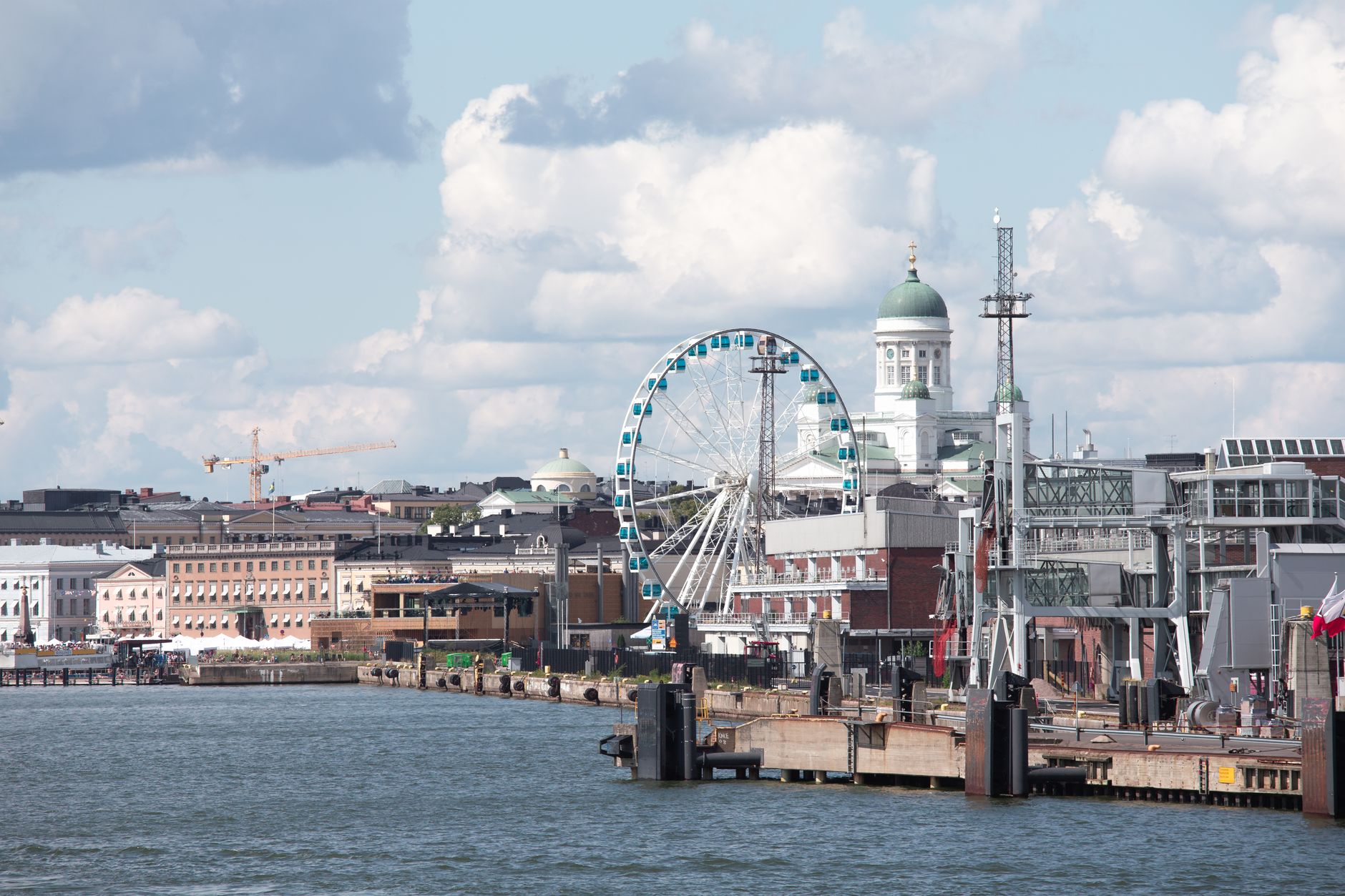
Helsinki: Where Most Trips Start
Helsinki is compact and walkable, but data still matters. You'll want to look up restaurant reviews on the fly, check HSL app for tram and metro schedules, and maybe book last-minute tickets to the Amos Rex museum or the Oodi Library.
The city center has strong coverage everywhere. I tested speeds near the Senate Square and got 85 Mbps down on a 4G connection. Even underground in the metro, coverage held steady.
Don't miss the Market Square (Kauppatori) by the harbor. Grab a bowl of salmon soup for about 12 euros and sit by the water. The Old Market Hall next door has been serving locals since 1889, and you can find everything from fresh fish to Finnish chocolate inside.
Suomenlinna, the sea fortress on an island just a 15-minute ferry ride from the center, had solid coverage too. The ferry is included in your HSL transit pass, which costs about 3.10 euros for a single ticket or 9 euros for a day pass.
Lapland: Northern Lights and Remote Coverage
Here's where things get interesting. Lapland covers a massive area, and you might wonder if your eSIM will work up there. The short answer: yes, in most places you'll visit as a tourist.
Rovaniemi, the capital of Lapland and the "official" hometown of Santa Claus, has great coverage. The Santa Claus Village at the Arctic Circle is well-connected, so you can video call your kids while meeting Santa. Admission is free, though the activities inside range from 10 to 40 euros each.
Levi and Saariselka, two popular ski resorts, both have reliable 4G. I was streaming music on the slopes in Levi with no issues. Lift passes there run about 49 euros per day for adults during peak season.
The more remote wilderness areas can get spotty. If you're doing a multi-day husky safari or snowmobile expedition deep into the backcountry, expect gaps. But your guide will have satellite communication for emergencies, and you'll be back in coverage within hours.
For Northern Lights hunting, most organized tours operate within 30-60 minutes of towns with coverage. I caught the aurora near Inari, about 40 minutes from the village, and had enough signal to snap photos and upload them right away. Tours typically cost between 70 and 120 euros per person.
The Lake District and Central Finland
Tampere, Finland's third-largest city, is a great stop between Helsinki and Lapland. Coverage is excellent throughout the city. The Moomin Museum is here, and the Pyynikki observation tower serves the best doughnuts in Finland for 3 euros. I'm not exaggerating.
The Lakeland region around Savonlinna and Jyvaskyla has good coverage along main roads and in towns. If you're renting a lakeside cabin (mokki), check the exact location. Some cabins are intentionally remote, which is part of the charm, but it means your signal might be weak.
A summer cabin rental in the Lake District runs anywhere from 80 to 200 euros per night depending on the season and amenities. Many Finns consider a week at the mokki sacred, and I get why.
Best eSIM Plans for Finland in 2026
Here's what I'd recommend based on trip length:
- Weekend in Helsinki: A 3 GB plan for 7 days, around $8-10
- One week covering Helsinki and Lapland: A 5-10 GB plan for 7 days, around $12-18
- Two weeks or more: A 20 GB plan for 30 days, around $25-30
- Nordic multi-country trip: A regional Europe plan if you're also visiting Sweden, Norway, or Estonia
Look for plans that use Elisa or Telia networks. These two have the best coverage in Lapland specifically. DNA is solid in southern Finland but slightly weaker up north.
Setting Up Your eSIM Before You Go
Install the eSIM at home before your flight. Seriously, don't wait until you're at the airport scrambling with QR codes on a tiny screen. Here's the basic process:
- Check that your phone supports eSIM (most phones from 2020 onward do)
- Purchase your Finland eSIM plan online
- Scan the QR code or enter the activation details in your phone settings
- Label the new line something like "Finland Data"
- Set it as your data line but keep your home number active for calls and texts
- Turn off data roaming on your home line to avoid surprise charges
The whole setup takes about 5 minutes. When you land in Helsinki, just make sure the eSIM line is active and you're good to go.
Practical Tips for Staying Connected in Finland
Finland has free WiFi in a lot of places. Most cafes, restaurants, hotels, and public buildings offer it. The Helsinki public library Oodi has fast free WiFi, and it's a gorgeous building worth visiting anyway. But free WiFi won't help you when you're standing on a frozen lake in Lapland trying to share that perfect photo.
One thing I learned: cold weather drains your battery faster. In Lapland during December, temperatures can drop to minus 20 Celsius. Keep your phone close to your body, use a power bank, and consider a phone case with some insulation. A dead phone means no data, no matter how good your eSIM plan is.
Also, download offline maps of Lapland before you head north. Even with coverage, having offline backup is smart. Google Maps lets you download specific regions, and it's saved me more than once on rural Finnish roads.
Is an eSIM Better Than a Finnish Prepaid SIM?
For most visitors, yes. A local prepaid SIM from a store like R-Kioski costs about 5-10 euros for the card plus a data package. That's comparable in price, but the convenience factor of eSIM wins. You don't waste travel time shopping for a SIM, you don't need a SIM ejector tool, and you can keep your home number active at the same time.
The only scenario where a local SIM might be better is if you need a Finnish phone number for local calls. Some accommodation booking systems or local services might prefer a Finnish number. But for the vast majority of travelers, data-only eSIM is all you need.
Finland is one of those countries that rewards you for getting off the beaten path. But getting off the beaten path is a lot easier when you've got reliable data in your pocket. Set up your eSIM before you fly, and focus on what matters: the midnight sun, the sauna culture, and yes, those Northern Lights that'll leave you speechless.
Ready to get connected?
Browse affordable eSIM data plans for 200+ countries. Instant activation, no roaming fees.
Browse eSIM PlansTraveling to Finland?
Browse affordable eSIM data plans for Finland. Plans start from $1.14. Instant activation, no roaming fees.