The Netherlands is a country designed for efficiency. Trains connect every city in under two hours. Bike paths go everywhere. And the mobile network coverage is among the best in Europe. If you're visiting Amsterdam, Rotterdam, Utrecht, or the Dutch countryside in 2026, an eSIM will keep you connected without the hassle of buying a local SIM card.
I spent 12 days in the Netherlands last spring, covering everything from Amsterdam's canal houses to Rotterdam's futuristic skyline to the tulip fields of Lisse. Here's what you need to know about staying connected.
Dutch Mobile Networks: Fast and Reliable
The Netherlands has three major mobile operators: KPN, Vodafone, and T-Mobile. All three provide near-universal 4G coverage across the country. 5G has been rolled out in Amsterdam, Rotterdam, The Hague, Utrecht, and Eindhoven, with expansion ongoing.
The Netherlands is tiny. You can drive from the northernmost point to the southernmost in about 3.5 hours. That compact size means excellent coverage even in rural areas. I never lost signal once during my entire trip, including on country roads between small towns in Friesland.
Speed tests in Amsterdam showed consistent results of 60-90 Mbps on 4G. In Rotterdam, I hit 120 Mbps on a 5G connection near the Markthal. More than enough for anything you'd want to do on a phone.
eSIM Plans for the Netherlands
Here's what you'll find when shopping for a Netherlands eSIM:
- 1 GB, 7 days: around $5-7
- 3 GB, 7 days: around $8-11
- 5 GB, 15 days: around $12-16
- 10 GB, 30 days: around $18-25
- 20 GB, 30 days: around $25-32
Since the Netherlands is an EU country, a European regional eSIM works here too. If you're combining the Netherlands with Belgium, Germany, or France, a Europe-wide plan with 5-10 GB for $15-25 might be the better deal.
Amsterdam: More Than Just the Red Light District
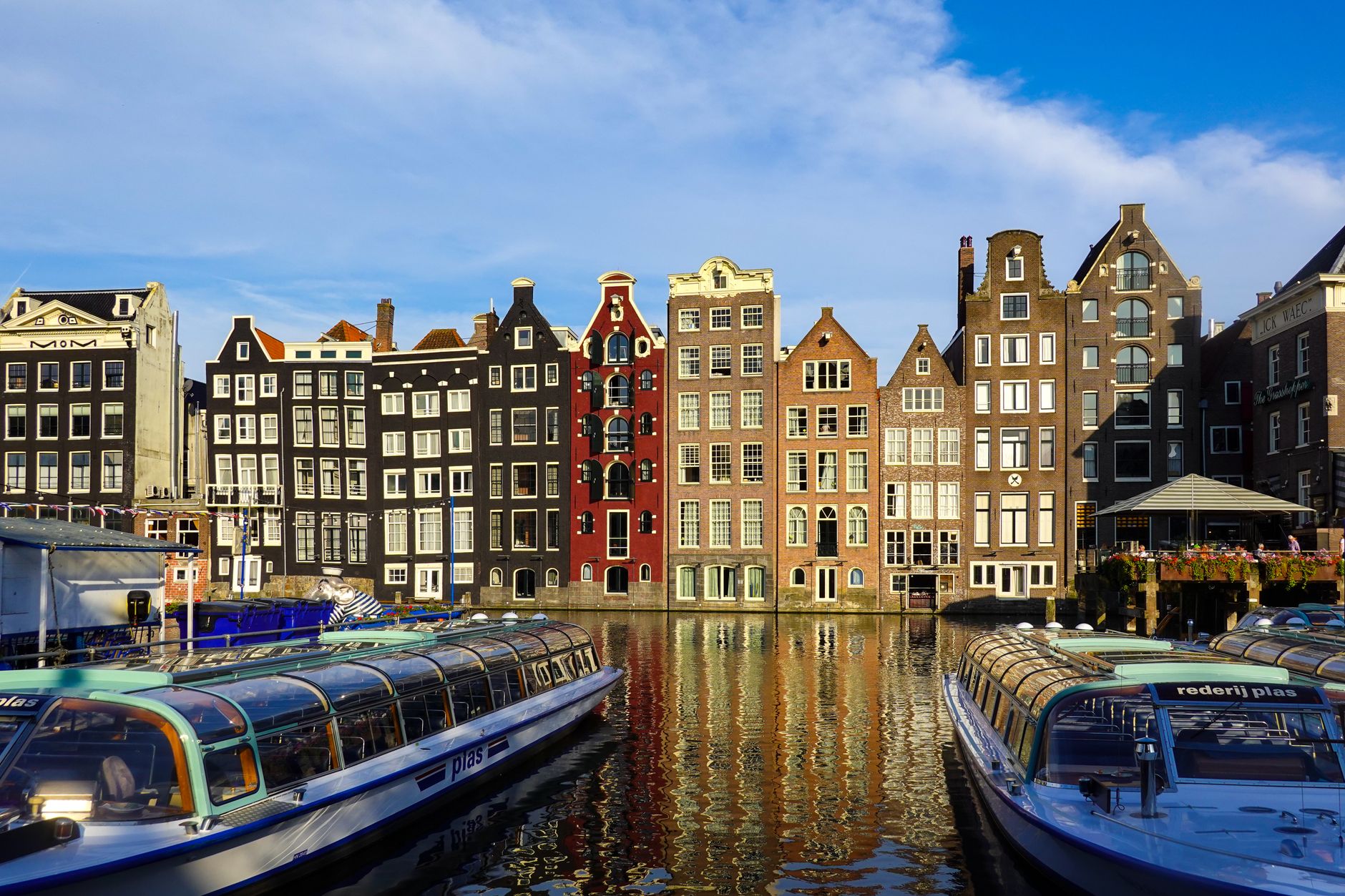
Amsterdam gets 20 million tourists a year, and many of them only see the Dam Square, the coffee shops, and the Red Light District. That's a shame, because the city has so much more going on.
The Rijksmuseum is worth a full morning. It houses Rembrandt's Night Watch, Vermeer's Milkmaid, and over 8,000 objects spanning 800 years of Dutch history. Tickets cost 22.50 euros and should be booked online in advance, since walk-up slots sell out quickly. The Anne Frank House is the same story: book 6 weeks ahead for tickets at 16 euros. Your eSIM data is useful for checking availability and booking on the spot if cancellations pop up.
The Van Gogh Museum (20 euros) is right next to the Rijksmuseum on Museumplein. Between those two museums and the Stedelijk Museum of Modern Art (22.50 euros), you could spend two full days on one square and not get bored.
For a more local experience, head to the Jordaan neighborhood. It's quieter than the center, with independent boutiques, brown cafes (the Dutch version of a pub), and some of the best Indonesian food outside of Indonesia. Rijsttafel (rice table), a shared feast of 12-20 small dishes, costs about 30-40 euros per person and is one of the best meals you can have in Amsterdam.
The Albert Cuyp Market in De Pijp neighborhood runs every day except Sunday. Street food here is fantastic. A fresh stroopwafel costs about 3.50 euros, and a portion of kibbeling (fried fish) is about 6-8 euros.
Rotterdam: The Anti-Amsterdam
If Amsterdam is old-world charm, Rotterdam is the opposite. The city was almost completely destroyed in WWII bombings and rebuilt with bold modern architecture. The Cube Houses (Kubuswoningen) by architect Piet Blom are unlike anything you've seen. You can visit the Show Cube for about 3.50 euros to see what it's like living inside one.
The Markthal is a horseshoe-shaped building with a massive food market inside and apartments in the arch above. The ceiling mural alone is worth the visit. Grab lunch here for 8-15 euros at one of the dozens of stalls.
The Erasmus Bridge (Erasmusbrug) spans the Maas River and looks spectacular at night when it's lit up. The Hotel New York, across the river in the former headquarters of the Holland America Line (where thousands of emigrants boarded ships to America), serves good oysters and has a terrace with views of the bridge.
Rotterdam's coverage is excellent. The city invested heavily in smart city infrastructure, and connectivity is rock solid everywhere, including inside the Markthal, on the water taxis, and in the underground metro system.
Beyond the Big Cities
The Netherlands rewards exploration outside Amsterdam and Rotterdam. Here are my favorite spots:
Utrecht: Just 25 minutes by train from Amsterdam, Utrecht feels like a smaller, calmer version of the capital. The Oudegracht canal has cafes and restaurants built into old canal-side cellars. The Dom Tower, at 112 meters, is the tallest church tower in the Netherlands. Climbing it costs 12.50 euros. Coverage throughout Utrecht is perfect.
The Hague (Den Haag): The political capital of the Netherlands, home to the International Court of Justice, the Mauritshuis museum (where you'll find Vermeer's Girl with a Pearl Earring, admission 19 euros), and the seaside district of Scheveningen with its wide beach and pier. About 50 minutes by train from Amsterdam.
Haarlem: Just 15 minutes from Amsterdam by train, but with a fraction of the tourists. The Grote Markt (main square) is stunning, the Teylers Museum is the oldest museum in the Netherlands (15 euros), and the local beer scene is thriving. The Jopenkerk is a brewery inside a former church.
Kinderdijk: A UNESCO World Heritage Site with 19 windmills from the 1700s. It's about 30 minutes from Rotterdam. Admission is 18 euros, and the windmills set against a flat Dutch polder landscape are exactly what you picture when you think of the Netherlands. Cell coverage at the site is fine.
Keukenhof Gardens: Open only from mid-March to mid-May, this is where you see the famous Dutch tulip fields. Over 7 million flower bulbs planted across 32 hectares. Tickets are about 20 euros. It's near Lisse, about 40 minutes from Amsterdam by bus. Coverage is good, and you'll need it because you'll be taking hundreds of photos.
Getting Around: Trains, Bikes, and Data
The Dutch rail system, operated by NS (Nederlandse Spoorwegen), is one of the best in Europe. Trains run frequently, are clean, and connect every major and minor city. The NS app requires data to check schedules and buy tickets. A single trip from Amsterdam to Rotterdam costs about 17 euros.
An OV-chipkaart (public transit card) costs 7.50 euros and works on trains, buses, trams, and metros across the country. You load money onto it and tap in and out. The anonymous version is available at stations and doesn't require registration.
Bikes are everywhere. Amsterdam alone has over 800,000 bikes (more bikes than people). You can rent one for about 12-15 euros per day from shops near Central Station. Use Google Maps cycling directions, as it knows the bike paths. Data usage for maps is light, around 5-10 MB per hour of navigation.
Data Usage Tips for the Netherlands
WiFi is widely available across the Netherlands. Most cafes, restaurants, museums, and hotels offer free WiFi. NS trains have onboard WiFi too, though it can be slow during rush hour. Schiphol Airport has free WiFi.
Even with all that WiFi, you'll want eSIM data for the moments in between. Navigating bike routes, finding restaurants, checking transit times, and translating Dutch when needed (though almost everyone in the Netherlands speaks excellent English).
- Weekend in Amsterdam: 2-3 GB is plenty
- One week across multiple cities: 5 GB for moderate use
- Two weeks with heavy photo uploads: 10 GB
- Working remotely: 15-20 GB, supplemented by hotel and cafe WiFi
Setup and Practical Advice
Install your eSIM before leaving home. Set it as your data line, keep your home number on your primary SIM, and disable roaming on that home line. When you arrive at Schiphol Airport, the eSIM should connect automatically. If it doesn't, toggle airplane mode on and off or restart your phone.
One more thing about the Netherlands: it rains a lot. Not heavy downpours usually, but frequent light drizzles. Bring a waterproof phone case or at least be mindful of your phone in the rain, especially while biking. A wet touchscreen is annoying, but a water-damaged phone is a real problem.
The Netherlands packs an incredible amount of culture, history, food, and design into a very small space. With an eSIM keeping you connected, you'll spend less time hunting for WiFi and more time doing what matters: eating bitterballen at a brown cafe, cycling along canals at sunset, and discovering why the Dutch have figured out so many things that the rest of the world is still working on.
Ready to get connected?
Browse affordable eSIM data plans for 200+ countries. Instant activation, no roaming fees.
Browse eSIM PlansTraveling to Netherlands?
Browse affordable eSIM data plans for Netherlands. Plans start from $1.24. Instant activation, no roaming fees.