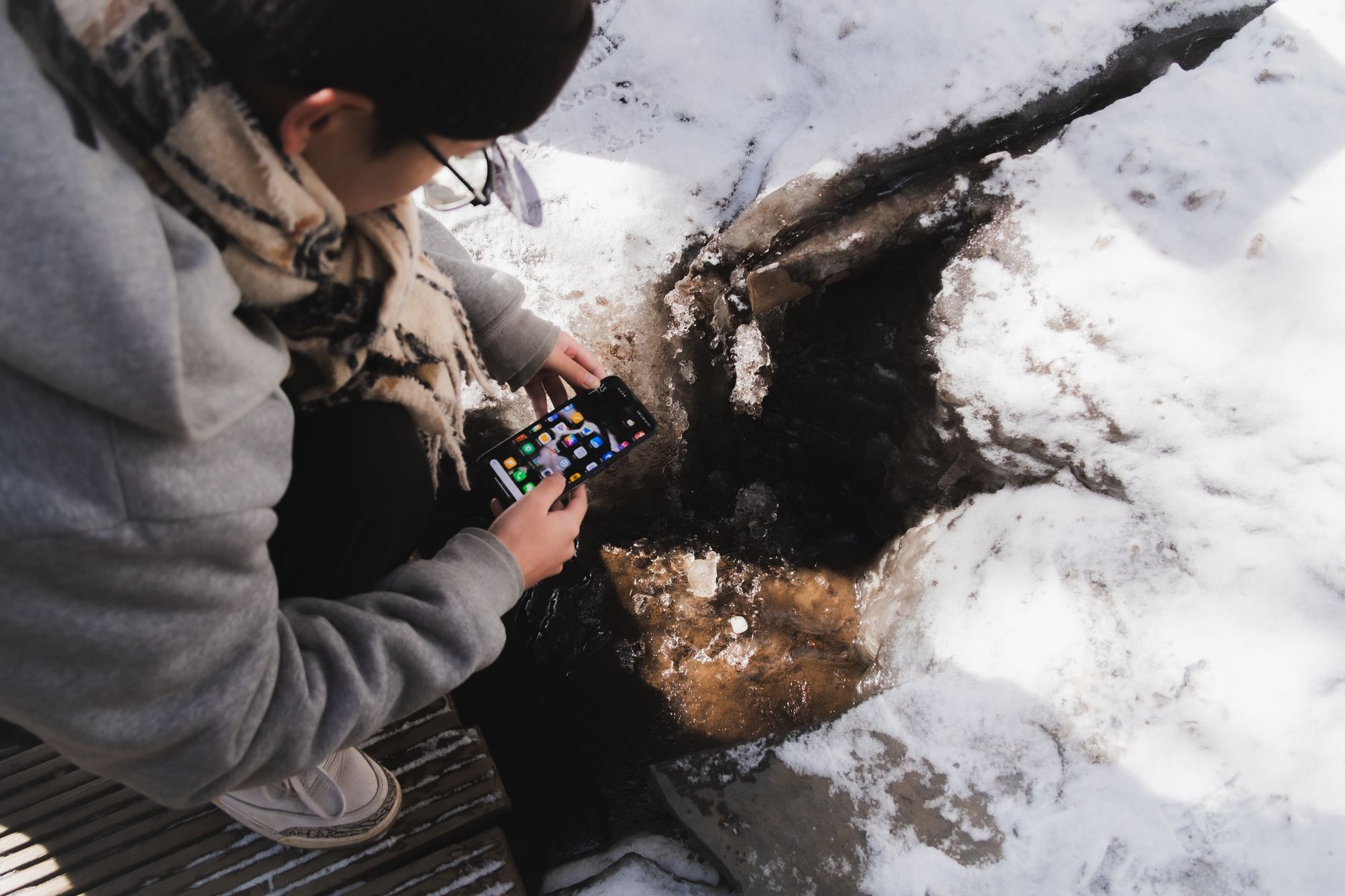
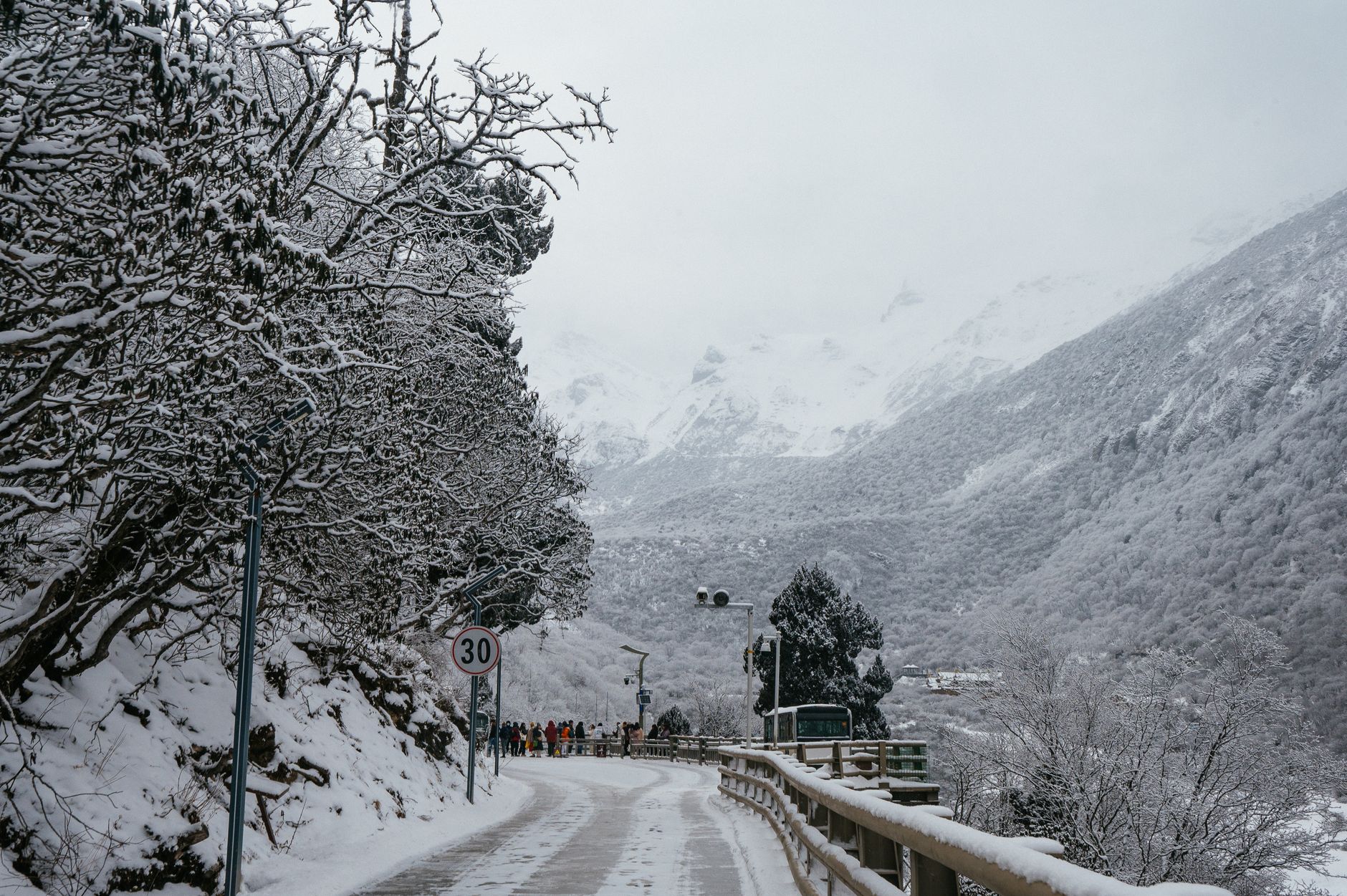
Last December, I was standing on a frozen lake in northern Norway, watching the aurora borealis ripple across the sky. My fingers were numb inside two layers of gloves. I pulled out my phone to take a photo and noticed the battery had dropped from 68% to 23% in about 40 minutes. By the time I got the camera open, it was at 19%.
Cold weather and smartphones do not get along. If you're traveling to a winter destination with an eSIM, you need to plan for conditions that actively work against your phone staying charged and connected. Here's everything I've learned from winters spent in Norway, Finland, Iceland, Canada, and Japan.
Why Cold Weather Kills Your Phone Battery
Your phone runs on a lithium-ion battery. These batteries work by moving ions through a chemical solution. When the temperature drops below about 0 degrees Celsius (32 degrees Fahrenheit), that chemical process slows down dramatically. The battery can't deliver power as efficiently, so your phone's reported battery percentage drops fast.
Apple says iPhones work best between 0 and 35 degrees Celsius. Below freezing, you'll notice reduced battery life and unexpected shutdowns. Samsung and Google give similar guidance for their devices.
At minus 10 Celsius (14 Fahrenheit), which is a normal winter day in Helsinki, Reykjavik, or Montreal, you can lose 20-30% of your battery capacity just from the cold. At minus 20 or minus 30, which you'll encounter in Lapland, Yellowknife, or Hokkaido, the problem gets much worse.
The good news: this is temporary. Once your phone warms up, the battery level often recovers. But if it dies in the cold, you're stuck without data until you can warm it up and recharge.
Keep Your Phone Warm: The #1 Rule
The single most effective thing you can do is keep your phone close to your body. Your body heat keeps the battery at a workable temperature. Here's what works:
- Keep your phone in an inside jacket pocket, against your torso, not in a backpack or outer pocket
- Use a hand-warmer packet in the same pocket as your phone (chemical hand warmers cost about $1-2 for a pair and last 6-8 hours)
- Only take your phone out when you need it, then put it right back
- If you're taking photos, do it quickly and return the phone to warmth
- Consider a neoprene phone sleeve for insulation (about $10-15 on Amazon)
I started carrying two hand warmers on every winter trip. One in each pocket, with my phone next to one of them. My phone now lasts the entire day even at minus 15.
Power Banks: Your Winter Essential
A portable power bank is important for any trip, but in cold weather it's absolutely critical. Here's what to know:
Power banks use the same lithium-ion chemistry as your phone, so they're also affected by cold. Keep your power bank warm too. Same rules: inside pocket, close to your body.
I recommend a 10,000 mAh power bank as a minimum for winter travel. That gives you roughly 2-3 full phone charges. For extended outdoor days (skiing, dog sledding, snowmobile tours), bring a 20,000 mAh bank. Anker and Ugreen make reliable options in the $20-40 range.
Charge your power bank every night at the hotel. Start each day with both your phone and power bank at 100%. In cold conditions, you'll be glad you did.
eSIM-Specific Tips for Cold Destinations
Your eSIM itself isn't affected by cold. It's a chip embedded in your phone, and it works fine at any temperature your phone can function in. The issue is entirely about battery life and keeping your phone powered on.
A few eSIM-related strategies for winter travel:
Download offline content before heading outdoors. Maps, translation packs, trail guides, and entertainment. The less your phone needs to use cellular data actively, the less battery it drains. Cellular radio usage is one of the biggest battery consumers.
Turn off WiFi scanning when you're outdoors. Your phone constantly searches for WiFi networks, which uses battery. In the middle of a ski slope or a frozen forest, there are no WiFi networks to find. Turn off WiFi and let your eSIM handle everything. It's actually more battery-efficient than constantly scanning for nonexistent hotspots.
Use low power mode. Both iPhone and Android have battery saver modes that reduce background activity, lower screen brightness, and limit push notifications. Turn it on before you head out for the day. You'll still have data and can use maps and messaging, but your phone won't waste battery on non-essential tasks.
Lower your screen brightness manually. Auto-brightness in snowy environments can crank your screen to maximum because of the bright reflected light. That drains battery fast. Set brightness to about 40-50% manually.
Popular Winter Destinations: What to Expect
Iceland: Reykjavik has solid 4G coverage. Once you head into the highlands or along the remote sections of the Ring Road, coverage gets spotty. The Snaefellsnes Peninsula and the Golden Circle route have decent coverage. Temperatures in winter range from minus 5 to plus 5 Celsius in Reykjavik, colder in the interior. An eSIM with 5-10 GB costs about $12-20 for Iceland.
Finnish Lapland: Rovaniemi and major ski resorts like Levi and Saariselka have good 4G coverage. Wilderness areas between towns can be dead zones. Temperatures regularly hit minus 20 to minus 30 Celsius in January. A Finland eSIM with 5 GB runs about $12-16.
Norway (Tromso, Lofoten, Nordkapp): Norway's coverage is surprisingly good even in northern areas, thanks to government investment in Arctic infrastructure. Tromso has full 4G/5G. Lofoten has coverage in villages but gaps between them. Temperatures range from minus 5 to minus 15 Celsius in winter. A Norway eSIM with 5 GB costs about $14-20.
Canadian Rockies (Banff, Jasper): The town of Banff and the ski areas at Lake Louise have good coverage. Jasper is more remote, with patchier signals. The Icefields Parkway between them has significant dead zones. Temperatures can hit minus 25 Celsius. A Canada eSIM with 5 GB runs about $15-22.
Hokkaido, Japan: Sapporo and Niseko ski resort have excellent coverage. Japanese networks are consistently fast, with speeds of 50-100 Mbps even in smaller towns. Rural areas in central Hokkaido can lose signal. Temperatures range from minus 5 to minus 15 Celsius. A Japan eSIM with 5 GB costs about $12-18.
Swiss Alps: Switzerland has outstanding coverage, even at altitude. Ski resorts like Zermatt, Verbier, and St. Moritz have 4G on the slopes. Temperatures at altitude range from minus 10 to minus 20 Celsius. Swiss eSIM plans are pricier: 5 GB for about $18-25.
Gear Recommendations for Winter Phone Use
Beyond keeping your phone warm and charged, a few accessories make winter phone use much easier:
- Touchscreen-compatible gloves: Spend $15-25 on a decent pair with conductive fingertips. The cheap $5 versions lose conductivity after a few washes. Moshi and Mujjo make good options.
- Phone lanyard or tether: Gloved hands drop phones. A lot. A simple wrist strap or lanyard prevents your phone from falling into snow (or worse, into a frozen lake). About $5-10.
- Waterproof phone pouch: Snow, ice, and condensation are real threats. When you bring a cold phone into a warm building, condensation can form inside the phone. A waterproof pouch helps. About $8-12 for a quality one.
- Neoprene phone sleeve: Adds insulation when your phone is in your pocket. Think of it like a tiny sleeping bag for your phone. $10-15.
What to Do If Your Phone Dies in the Cold
It happens. Even with preparation, extreme cold can shut down your phone. Here's what to do:
- Don't try to turn it on immediately. Let it warm up first.
- Put it in an inside pocket against your body for 10-15 minutes.
- Don't use a hair dryer or heater to warm it quickly. Rapid temperature changes can cause condensation inside the phone.
- Once it's warm, try turning it on. The battery often recovers to a usable level.
- If it won't turn on, connect it to your power bank while keeping both warm in your pocket.
One more note about condensation. When you move from extreme cold to a warm indoor environment (like walking into a restaurant from minus 20 outside), don't immediately start using your phone. Give it 5-10 minutes to gradually adjust. Using it while condensation is forming inside can cause short circuits or damage.
Winter travel is some of the most rewarding travel you can do. Watching the Northern Lights, skiing fresh powder, soaking in an Icelandic hot spring under falling snow, exploring a city like Prague or Tallinn dusted in white. Your eSIM will work perfectly in all these places as long as you keep your phone alive. Treat your battery like a resource to manage, bring backup power, and keep everything warm. Do that, and your winter trip will be just as connected as a summer one.
Ready to get connected?
Browse affordable eSIM data plans for 200+ countries. Instant activation, no roaming fees.
Browse eSIM Plans