
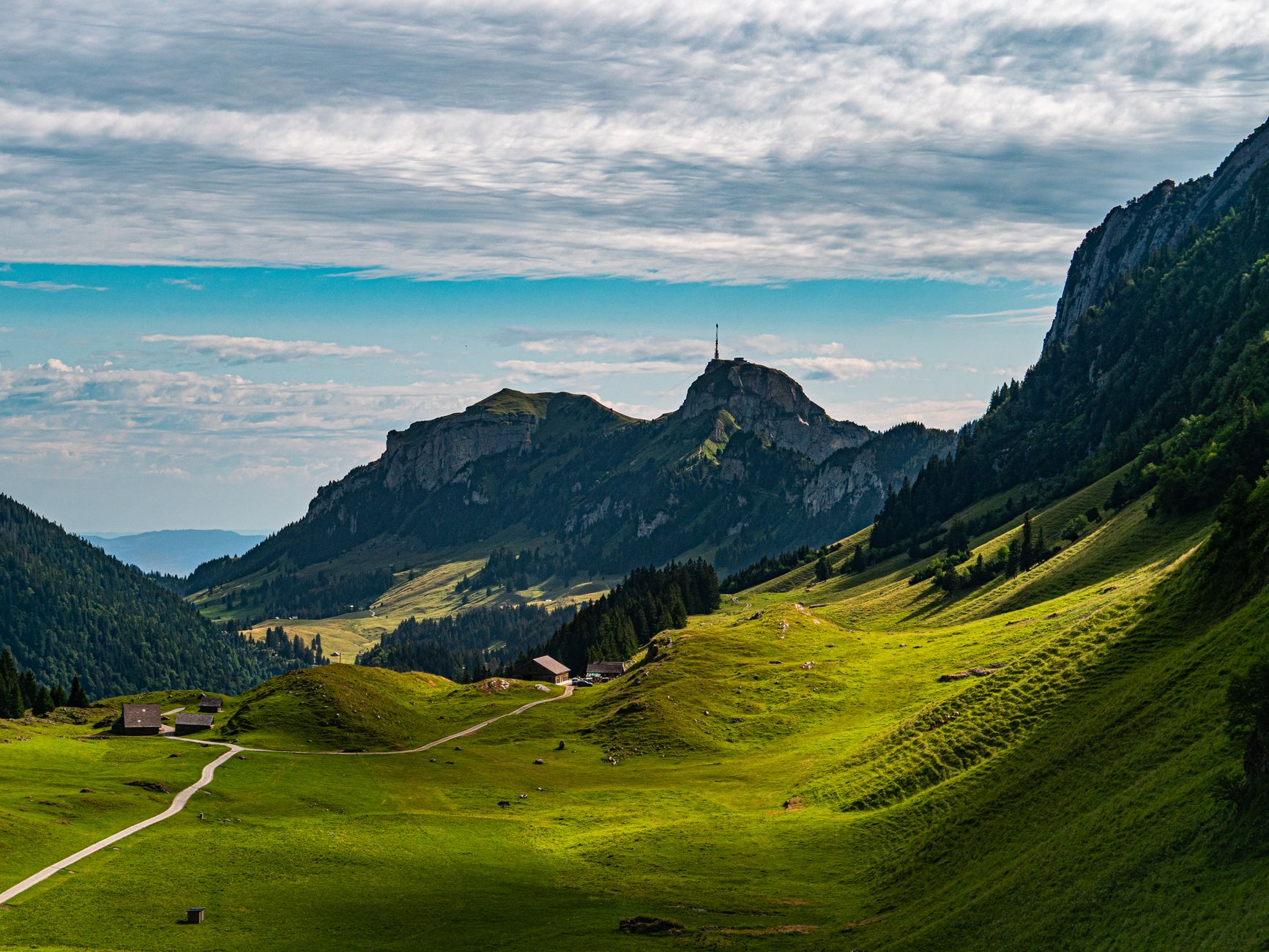
Switzerland is one of those places that looks so good on camera you almost wonder if it is real. Snow-capped peaks, crystal lakes, perfectly maintained trails, and trains that run with absurd punctuality. But it is also one of the most expensive countries in Europe for mobile data, and if you land in Zurich without a plan, your carrier will happily charge you $15 per megabyte in roaming fees.
An eSIM fixes that problem before you even board your flight. Here is everything you need to know about staying connected across Switzerland in 2026.
Why You Need an eSIM for Switzerland
Switzerland is not part of the EU, which means those nice EU roaming deals do not apply here. Even if you have a European eSIM that works across 30+ EU countries, Switzerland is often excluded. That catches a lot of travelers off guard.
Buying a local SIM at the airport is an option, but it is not cheap. Swisscom, the dominant carrier, charges around CHF 29-39 ($33-44) for a prepaid tourist SIM with limited data. Sunrise and Salt offer similar pricing. You are paying Swiss prices for Swiss data, and everything in Switzerland costs more than you expect.
A travel eSIM from a provider like getesimonline.com typically runs $5-15 for the same amount of data. You activate it before you land, and you are connected the moment you step off the plane in Zurich or Geneva.
Network Coverage: Swisscom, Sunrise, and Salt
Switzerland has three main carriers, and the coverage situation is surprisingly good even in mountainous terrain.
Swisscom
The biggest network with the best coverage. Swisscom reaches about 99% of the population and has strong signal even in Alpine valleys. If your eSIM routes through Swisscom, you are golden pretty much everywhere. Their 5G network covers all major cities and is expanding to tourist regions.
Sunrise
The second largest carrier, and honestly the coverage difference from Swisscom is minimal in urban and tourist areas. Sunrise has aggressive 5G rollout and consistently wins speed tests in Zurich and Geneva. Very solid option.
Salt
The budget carrier, but do not let that fool you. Salt covers all major cities and tourist corridors well. You might notice weaker signal in very remote Alpine areas compared to Swisscom, but for most travelers it works perfectly.
Most travel eSIMs connect to whichever network has the strongest signal in your area, so you often get the benefit of multiple networks.
City-by-City Coverage
Zurich
Excellent coverage everywhere. The financial district, Old Town (Altstadt), lake promenades, and even the surrounding hills all have strong 4G/5G signal. You will have zero issues streaming, navigating, or video calling from anywhere in the city.
Geneva
Same story. Full coverage across the city center, the UN district, Lake Geneva waterfront, and surrounding areas. The CERN area on the outskirts has good signal too.
Lucerne
The Chapel Bridge, the Lion Monument, the lakefront -- all well covered. Signal stays strong on the boat cruises across Lake Lucerne, though it can dip briefly in the middle of the lake.
Interlaken and Jungfrau Region
Interlaken itself has great coverage. Heading up to Jungfraujoch (the "Top of Europe" at 3,454 meters), you will have signal for most of the cogwheel train journey. At the summit station, Swisscom and Sunrise both have antennas, so you can post that obligatory mountain selfie right from the top.
Zermatt and the Matterhorn
Zermatt has solid coverage throughout the car-free village. The Gornergrat railway up to the Matterhorn viewing point maintains signal for most of the ride. At the Gornergrat summit (3,089 meters), you will have enough signal to send photos and messages. Do not expect HD video streaming at 3,000 meters, but basic connectivity works.
Swiss Train Connectivity (SBB)
The Swiss rail system (SBB) is famously efficient, and you will probably spend a lot of time on trains. Here is what to expect for connectivity:
Major routes like Zurich-Bern, Zurich-Geneva, and Bern-Interlaken have consistent 4G coverage with occasional brief drops in tunnels. The Gotthard Base Tunnel (the world is longest rail tunnel at 57 km) does have cellular repeaters inside, though signal can be patchy in spots.
The scenic routes are a mixed bag. The Glacier Express between Zermatt and St. Moritz passes through dozens of tunnels and deep valleys. You will lose signal regularly, sometimes for several minutes. Same goes for the Bernina Express. These trains have onboard Wi-Fi, but it is often slow and unreliable. Your eSIM will reconnect quickly each time you exit a tunnel.
For the Golden Pass route from Lucerne to Montreux, coverage is better since it stays in broader valleys most of the time.
Hiking and the Swiss Alps
If you are hitting the trails, coverage depends heavily on altitude and terrain. Popular, well-trafficked trails near resort towns generally have decent signal. The Eiger Trail near Grindelwald, the Oeschinensee loop above Kandersteg, and the Five Lakes Walk in Zermatt all maintain workable coverage for most of the route.
Once you get into more remote backcountry, above treeline, or into narrow side valleys, signal drops off. That is true for any carrier. If you are doing serious multi-day hikes like the Haute Route or the Via Alpina, bring offline maps and do not count on consistent mobile data.
For day hikes from popular bases, your eSIM will work for navigation, photos, and check-ins about 80% of the time.
How Much Data Do You Need?
Switzerland trips tend to be data-light because you are spending time outdoors rather than glued to your phone. A typical week of sightseeing, train travel, maps, and social media posting runs about 3-5 GB. If you are doing video calls or working remotely (co-working in Zurich is popular), bump that to 7-10 GB.
A weekend city break in Geneva or Zurich? 1-2 GB is plenty.
Tips for Staying Connected in Switzerland
- Download the SBB app offline schedules before your trip. Swiss trains are reliable but knowing the schedule saves you from needing data at small stations.
- Pre-download maps for any hiking you plan to do. The SwitzerlandMobility app has excellent offline trail maps.
- Activate your eSIM before you fly. Switzerland is not in the EU, so your plane will not auto-connect like it might landing in Paris or Rome.
- Swiss hotels and restaurants almost always have free Wi-Fi, and it is usually fast. Use it for heavy uploads and downloads.
- Mountain huts (SAC huts) sometimes have Wi-Fi but do not count on it. It is often reserved for staff or extremely slow.
Bottom Line
Switzerland is expensive enough without adding roaming charges on top. A local prepaid SIM runs $33+ and requires finding a shop and swapping cards. A travel eSIM costs a fraction of that and works the moment you land. Coverage across all three Swiss networks is excellent in cities and tourist areas, solid on major train routes, and workable on popular hiking trails. For remote Alpine territory, no carrier can promise perfect signal, but that is kind of the point of being in the mountains.
Grab your eSIM from getesimonline.com, download your offline maps, and go enjoy those ridiculous views. Your phone will keep up everywhere it matters.
Get Your eSIM for Switzerland
See our Switzerland eSIM plans for Zurich, Geneva, and the Alps. Also visiting Austria or Germany?
Ready to get connected?
Browse affordable eSIM data plans for 200+ countries. Instant activation, no roaming fees.
Browse eSIM PlansTraveling to Switzerland?
Browse affordable eSIM data plans for Switzerland. Plans start from $1.14. Instant activation, no roaming fees.