Train travel across Europe is having a moment. Sleeper trains from Paris to Vienna, high-speed routes through Spain, scenic rides through the Swiss Alps. But here's the thing nobody mentions in those dreamy Instagram reels: mobile connectivity on trains is wildly inconsistent.
I've taken trains in 14 European countries over the past two years. Some had rock-solid 4G the entire journey. Others dropped signal so often that even sending a WhatsApp message felt like an achievement. Here's what I've learned about staying connected on rails.
Why Train WiFi Is Usually Terrible
Most European trains offer onboard WiFi. Most of it is awful. The reason is simple: train WiFi works by connecting to cellular towers along the route, then redistributing that signal to passengers via a router. When 200 people share that single connection, everyone gets a tiny slice.
I tested train WiFi on the Eurostar (London to Paris), the ICE (Berlin to Munich), and the AVE (Madrid to Barcelona). The Eurostar was decent through the tunnel but slow in northern France. The ICE dropped completely for 15-minute stretches through rural Germany. The AVE was surprisingly good for the first hour, then degraded badly once we left the Madrid commuter zone.
In practice, train WiFi is fine for email and light browsing. Don't count on it for video calls, file uploads, or streaming.
Your eSIM as Primary Connection on Trains
This is where having your own cellular connection makes a real difference. Your phone connects directly to cell towers along the route, independent of the train's shared WiFi. You're not competing with 200 other passengers for bandwidth.
On the same ICE train where WiFi dropped constantly, my eSIM maintained a usable 4G connection about 80% of the time. Not perfect, not fast enough for video calls during the dead zones, but reliable enough for messaging, maps, and emails.
Best and Worst Countries for Train Connectivity
After extensive testing, here's my honest ranking:
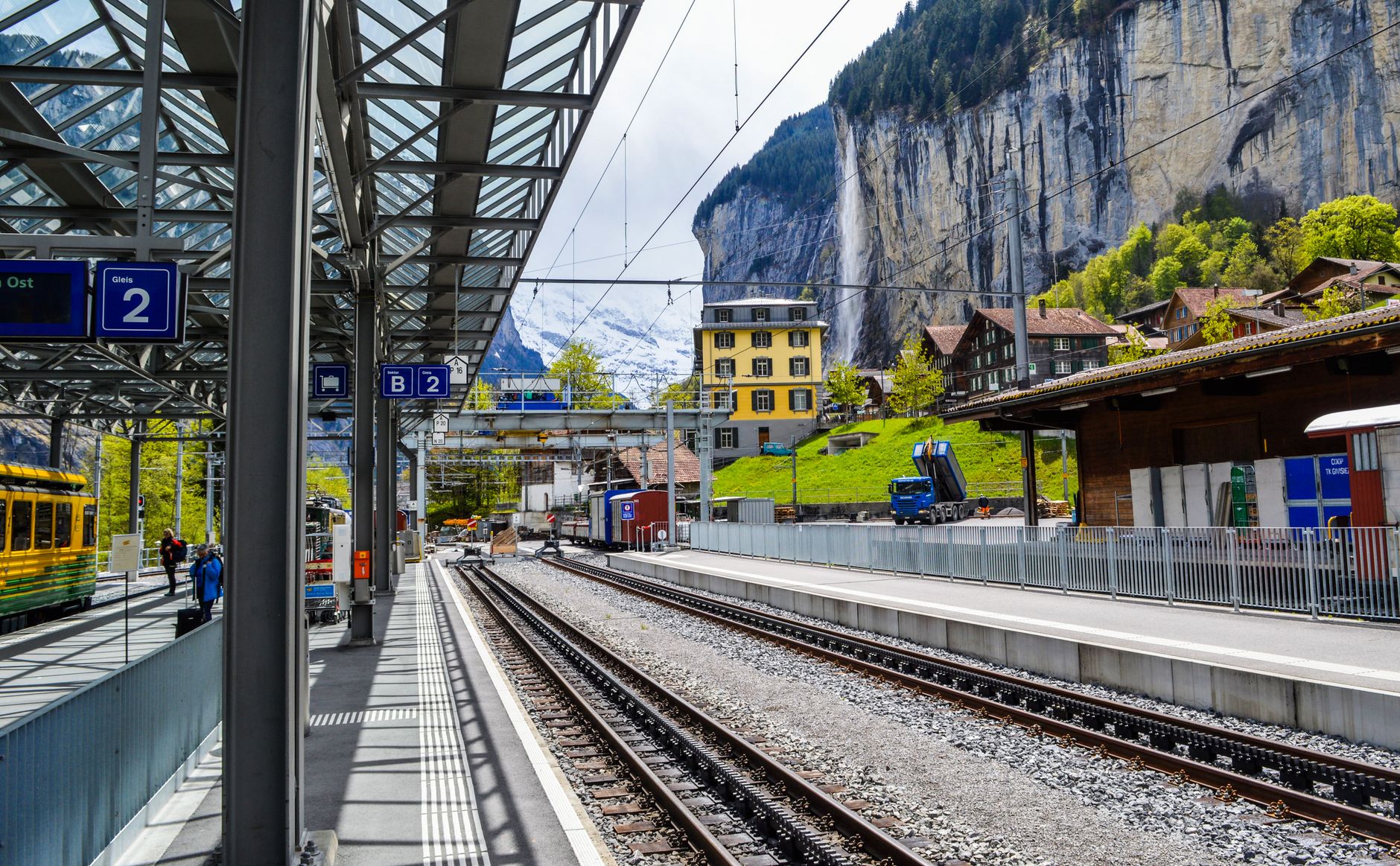
Excellent coverage: South Korea's KTX has near-perfect coverage. Japan's Shinkansen, obviously. Netherlands is flat with towers everywhere. Switzerland invested heavily in tunnel repeaters.
Good but patchy: Germany is great in cities with gaps in countryside. France TGV routes are well covered but regional lines less so. Spain's AVE corridors are solid. UK is improving but the Midlands are still rough.
Expect dead zones: Italy has beautiful mountain routes with terrible signal. Austria's Alpine tunnels kill everything. Norway's fjord country means signal bouncing off cliffs. Scotland gets rough once you leave the central belt.
How Much Data Do Trains Actually Use?
Less than you'd think if you're smart about it. A four-hour train ride with moderate usage (messaging, emails, some browsing, checking connections) uses about 200-400MB. That's nothing on a 5GB plan.
The data killers on trains are streaming video, social media scrolling with auto-play, and cloud sync uploading photos in the background. Turn off auto-upload before boarding and you'll barely dent your allowance.
Pro Tips for Train Travel with eSIM
Download your route offline before boarding. Google Maps lets you save entire regions. I download a strip along my route so even when signal drops, I can see where I am and how far to my stop.
If you're crossing borders by train (which is half the fun in Europe), a regional eSIM plan is essential. A single European plan covers you from Amsterdam to Rome without switching anything. Your phone just picks up whatever carrier is strongest as you cross from one country to the next.
For Japan's Shinkansen, you genuinely don't need to worry. Coverage is exceptional. I streamed music for the entire Tokyo to Osaka ride without a single buffer.
Night Trains: A Special Case
Sleeper trains are making a comeback in Europe. The Nightjet from Vienna to Rome, the Caledonian Sleeper in Scotland, the Santa Claus Express in Finland. These routes often pass through the most remote areas at the worst times. Think 3 AM through Alpine passes.
Just accept that you won't have signal for chunks of the night. Download whatever you need before boarding. A podcast, an audiobook, a Netflix episode. Use the forced disconnection as a feature, not a bug. You're rocking gently through the Alps in a sleeper cabin. Do you really need to check Slack?
Bottom Line
Train travel and eSIM are a natural match. You get reliable personal connectivity that doesn't depend on the train's overcrowded WiFi, and a regional plan means border crossings are invisible. Just set realistic expectations: coverage will drop in tunnels and mountain passes. The scenery in those moments is usually worth putting your phone down for anyway.
Stay Connected on Your Trip
Get eSIM plans for Japan, Italy, Australia, Greece, and 200+ destinations.
Ready to get connected?
Browse affordable eSIM data plans for 200+ countries. Instant activation, no roaming fees.
Browse eSIM Plans