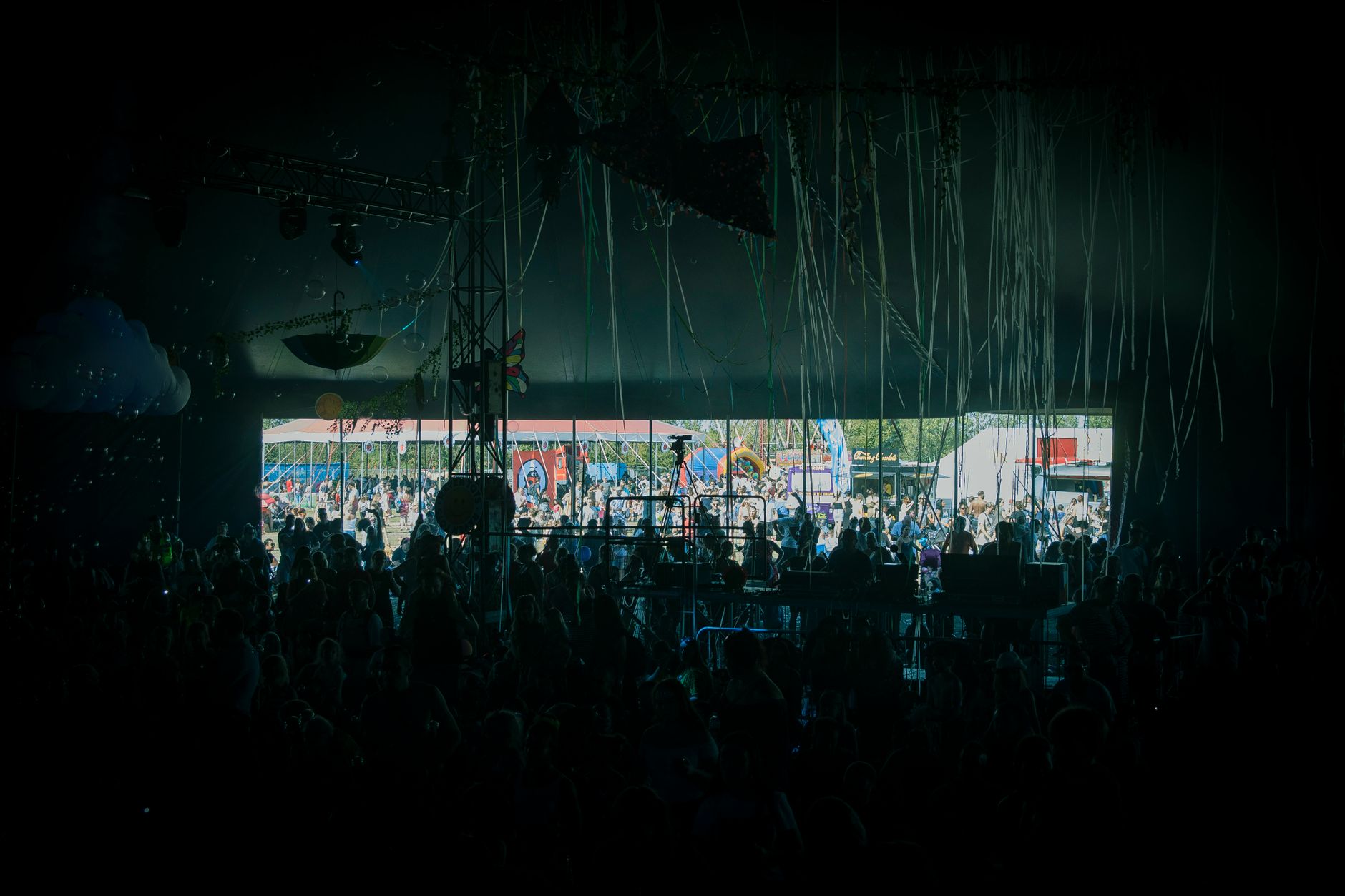
You're at Tomorrowland in Belgium, Glastonbury in England, or the World Cup in wherever FIFA decided to host it this time. The music is incredible, the atmosphere is electric, and your phone says "No Service." Fifty thousand other people are trying to post the same sunset set to their Instagram stories, and the cell towers are absolutely drowning.
This is the reality of using mobile data at large events abroad. But it doesn't have to ruin your experience. With the right eSIM setup and a few smart tricks, you can stay connected even when the network is getting hammered by tens of thousands of simultaneous users.
Why Events Abroad Are a Connectivity Nightmare
Large events create a perfect storm for mobile networks. You've got anywhere from 10,000 to 200,000+ people concentrated in a small area, all trying to use data at the same time. Cell towers have finite capacity, and even temporary towers brought in for events can only handle so much.
Add international roaming to the mix, and it gets worse. Your home carrier's roaming partner might have lower priority on the local network compared to direct subscribers. That means your roaming data gets deprioritized exactly when the network is most congested.
An eSIM plan from a provider like getesimonline.com connects you through the local network directly, giving you the same priority as local users. It won't magically solve congestion, but you won't be at the bottom of the priority queue either.
Music Festivals: The Data Challenge
Music festivals are probably the toughest connectivity environment you'll face. Multi-day events in rural locations with portable infrastructure and massive crowds. Here's what to expect at some major international festivals:
Tomorrowland (Belgium): Around 200,000 attendees per weekend. The organizers bring in extra cell towers, but speeds still crawl during headliner sets. A Belgium or Europe eSIM gives you access to Proximus, Orange, and Base networks. Try them all - sometimes one carrier has better on-site coverage than others.
Glastonbury (UK): 200,000+ people on a farm in Somerset. Coverage has improved with temporary masts, but don't expect to video call anyone during the Saturday night headliner. EE tends to have the best on-site coverage. A UK eSIM on the EE network is your best bet.
Coachella (USA): The Indio desert location actually has reasonable infrastructure since it happens every year. T-Mobile and Verizon both deploy additional capacity. A US eSIM works well here.
Primavera Sound (Barcelona): Urban location means better base infrastructure. Coverage is typically decent throughout the venue. A Spain eSIM will serve you well.
Fuji Rock (Japan): Remote mountain location in Niigata. Japan's network infrastructure is exceptional, but even here, 40,000 people in a ski resort valley creates congestion. A Japan eSIM on the docomo or au network performs best.
Sporting Events: A Different Data Pattern
Sporting events have a unique data usage pattern. Instead of continuous use, you get massive spikes during breaks - halftime, between innings, set changes. Everyone simultaneously opens their phone to check scores, post reactions, and message friends.
Champions League finals, World Cup matches: Stadium wifi (if it exists) is almost always overloaded. Your eSIM mobile data is more reliable. Send your messages and posts during play when fewer people are on their phones, not during halftime when everyone else does.
Formula 1 races: F1 venues are spread across countries from Monaco to Singapore to Abu Dhabi. A local eSIM for each race country is the move. The F1 app uses about 50-100MB per race for live timing data.
Tennis Grand Slams: The Australian Open, Roland Garros, Wimbledon, and the US Open all have different network situations. Urban locations (Melbourne, Paris, London, New York) mean better infrastructure, but 30,000+ tennis fans still create congestion. Get a local eSIM rather than roaming.
Pre-Event Preparation Checklist
The work you do before the event matters more than anything during it:
- Install your eSIM 2-3 days before the event. Not at the airport, not at the venue gate. Give yourself time to troubleshoot if needed
- Download offline maps of the venue area and surrounding region. If the network goes down, you can still navigate to your hotel, the train station, or the parking lot
- Download the event's official app on hotel wifi. Festival maps, set times, stage locations - download all of this content before you arrive. Most event apps can work partially offline
- Pre-load your payment apps. Apple Pay, Google Pay, or the event's cashless payment system. Make sure they're set up and working before you're standing at a bar with no signal trying to buy water
- Save your accommodation details offline. Screenshot your hotel address, booking confirmation, and directions. Don't rely on pulling up your email at 2 AM when the network is fried
Smart Data Usage During Events
When 50,000 people are competing for bandwidth, how you use your data matters:
Text beats everything. WhatsApp text messages go through when Instagram stories won't upload. If you need to find your friends in a crowd, send a text with your location pin rather than trying to share a live location.
Compress your photos before posting. A 12MB RAW photo isn't going to upload on a congested network. Take the photo, let your phone process it, and post the compressed version. Or better yet, batch-upload everything when you're back at the hotel on wifi.
Avoid video in peak moments. Everyone trying to livestream the headliner simultaneously is exactly why nobody can livestream the headliner. Record video locally and upload later. Your phone's storage is more reliable than the network during peak congestion.
Turn off background data. Go into your phone settings and disable background app refresh. You don't need Instagram, TikTok, and email all silently consuming bandwidth while you're trying to send one message to your friend about where to meet.
Use airplane mode strategically. If you don't need data for the next hour (you're watching a set and not planning to post anything), put your phone in airplane mode. It saves battery and reduces your frustration with slow speeds.
Meeting Up with Friends at Events
This is where connectivity really matters. Losing your group at a 100,000-person festival is easy and stressful. Some tips that actually work:
- Set specific meeting points and times as backup. "If we lose each other, meet at the main stage sound booth at the top of every hour"
- Share your live location on WhatsApp or Google Maps before the event starts (while you still have good signal)
- Use walkie-talkie apps like Zello as a backup. They use very little data and can sometimes push through when regular messages can't
- Agree on a meeting point near a landmark that's easy to find without data - the main entrance, a specific food vendor, the first-aid tent
How Much Data Do You Need for Event Travel?
For a typical international event trip (fly in, attend event for 1-3 days, fly out):
- The event days themselves: 200-500MB per day (mostly messaging and maps, with some social media)
- Travel days (airport, transport, hotel): 300-500MB per day
- Total for a 5-day trip: 2-3GB is comfortable
If you plan to post lots of social media content, bump that to 5GB. And if you're attending a multi-day festival and camping on-site without wifi? Go for 5-10GB to be safe.
Browse plans at getesimonline.com for the country where your event is happening. Regional plans work great too if you're combining the event with tourism in neighboring countries.
The Real Talk
Here's the honest truth about mobile data at massive events: it's going to be slow sometimes. No eSIM, no carrier, no plan in the world can fully overcome the physics of 100,000 phones competing for bandwidth from a handful of cell towers. What an eSIM does is give you the best possible chance at connectivity, at a fraction of roaming costs, with local network priority instead of deprioritized roaming access.
Prepare beforehand, use data smartly during the event, save the big uploads for later, and most importantly - put your phone down for a few sets and actually experience the event. That's what you flew across the world for.
Browse Plans for Your Event
Get eSIM data for events in Spain, UK, Qatar, UAE, and 200+ countries.
Ready to get connected?
Browse affordable eSIM data plans for 200+ countries. Instant activation, no roaming fees.
Browse eSIM Plans